
You Can’t Short the Singularity
AI has solved the Navier-Stokes problem, hacked our most secure systems, and designed new cancer treatments.
It still can’t outperform the S&P 500.
When will AI beat the market?
It’s a trillion-dollar question staring the labs in the face.
The answer is surprisingly elegant.
It begins with the 1991 construction of the world’s largest robot.
Measuring 360 meters of steel, the Maeslantkering is the largest moving structure on earth. It operates completely autonomously.
The Dutch know it as their floodgate, built to protect Rotterdam’s 2.7 million residents from deadly storm surges.
To do its job, the robot must perfectly predict the sea level.
The simplest model of sea level is a switch.
When the tide is high, the switch is on. When the tide is low, it switches off.
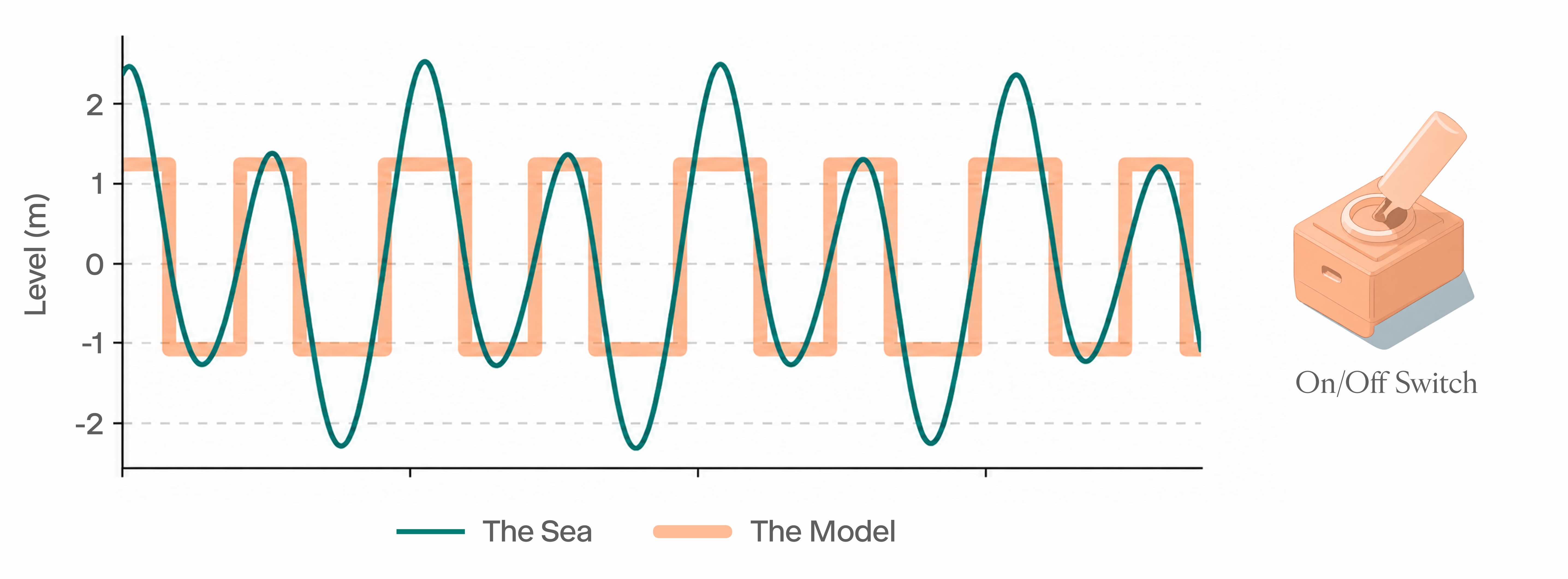
A switch (orange) is a bad model of reality (teal).
But the switch misses the shape of the tide. A rising tide still crosses the danger threshold.
The robot needs a better model.
The tide is largely driven by the moon, with its gravitational pull tracing a periodic curve on the oceans. Replace the switch with a sinusoid, and the robot’s prediction starts to trace the tide.
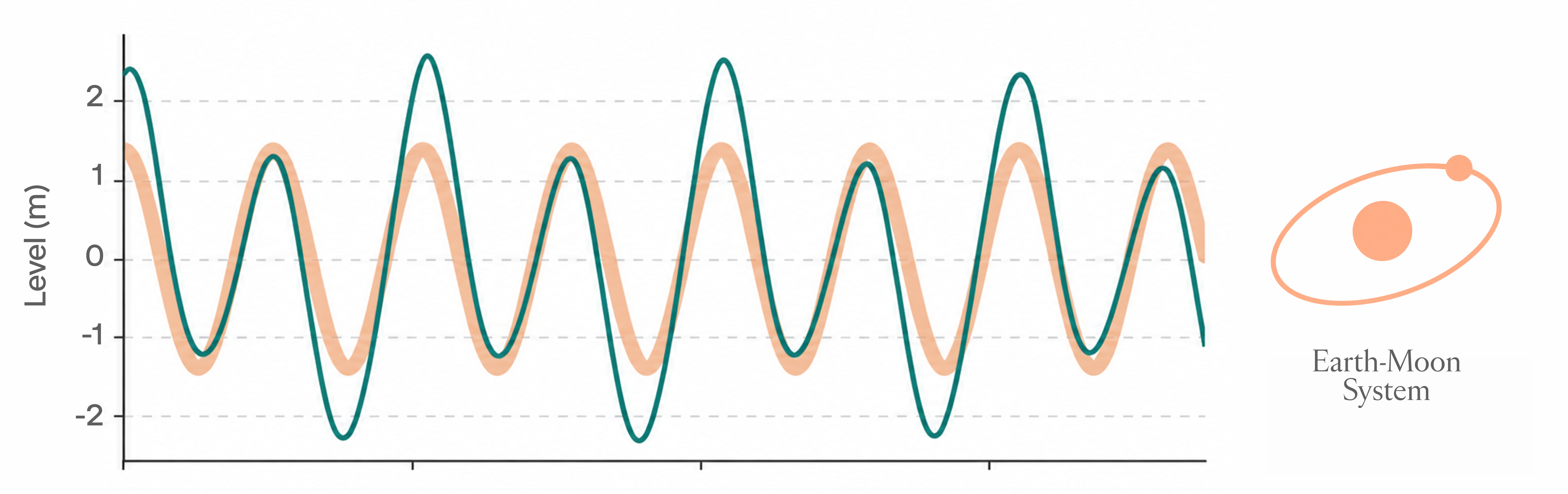
The moon's gravity (orange) is a better model of reality (teal).
It’s still imperfect. The tide is also shaped by the Sun's pull, the bay’s bathymetry, the orbit’s eccentricity, and dozens of other factors.
Only when the robot contains all relevant structure of the solar system can it predict the tides.
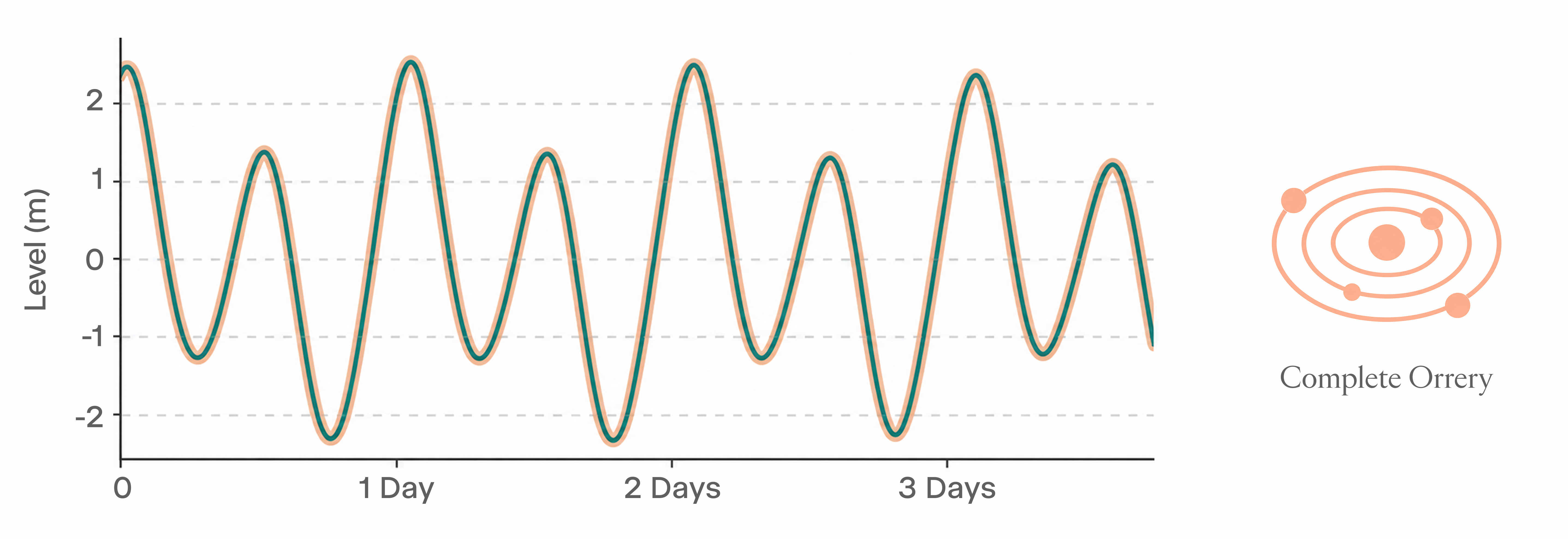
All tidal forces (orange) allow for the model to perfectly match reality (teal).
This exemplifies the Good Regulator Theorem, proved by Conant and Ashby in 1970:
“Every good regulator of a system must be a model of that system.”
It perfectly explains AI’s capability frontier today:
- Chess models contain board geometry, reconstructed from move sequences.
- Coding agents contain the rules of computation, derived from every line of open source code.
- Video and world models contain physical laws, rederived from pixels.
AI is eating the world.
But only in the order of what it can swallow.
Here’s the same gap between model and reality, redrawn for the stock market:
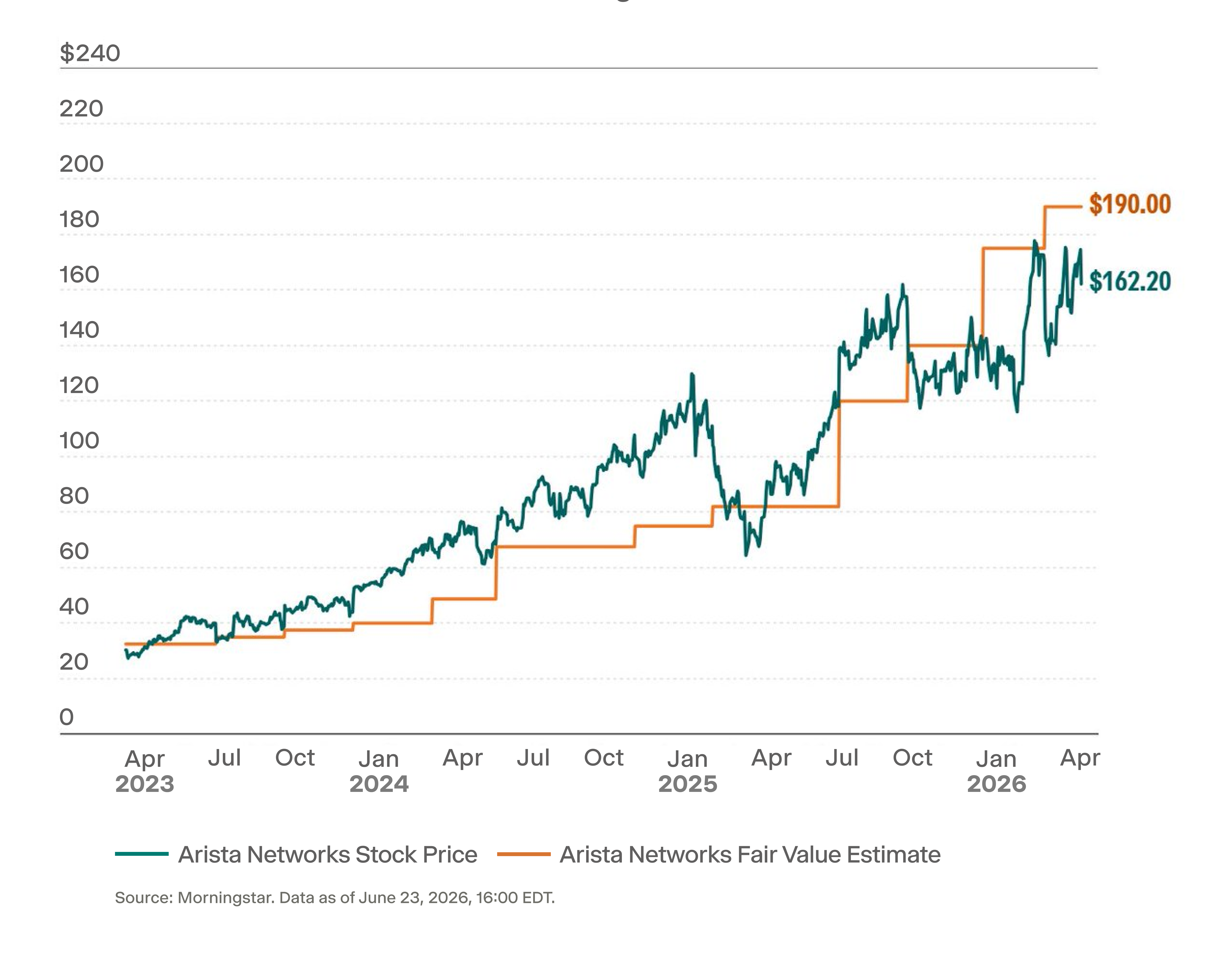
Morningstar's model (orange) for valuation diverges from reality (teal).
Clearly, Morningstar’s ‘fair value estimate’ is not a ‘good regulator’.
Perhaps Morningstar isn't world-class at valuing stocks. But the same picture holds inside top decile hedge funds’ own internal price targets. Nobody has a good regulator for prices, and it’s due to a simple fact:
Markets are self-referential, or as economists call them, reflexive systems.
Prices are set by millions of people watching the price, watching one another respond to the price, and responding in turn.
Nobody has built an AI that contains the crowd.
Markets are falling in the order AI can contain them.
But finance is still falling, and some markets are already contained.
The theorem perfectly explains the order in which they fall:
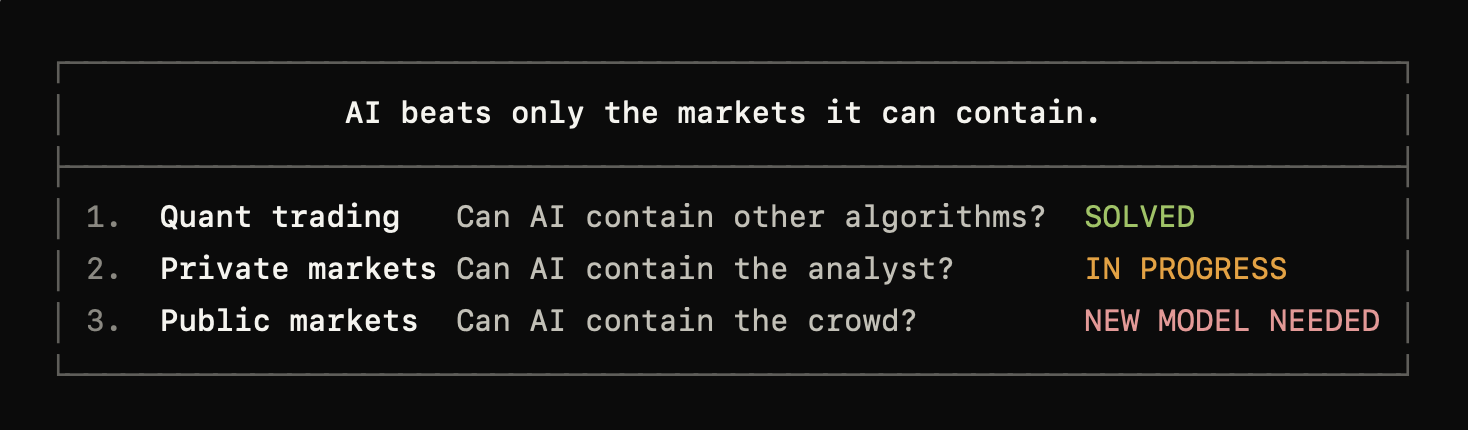
1. The quants already built superintelligence.
AI already contains other algorithms.
The first financial superintelligences were not LLMs.
They were quant trading systems.
At millisecond horizons, quant firms have already built ‘good regulators’.
No human can react that fast, so short-term predictions are less reflexive. The only things that can generate fast prices on that timescale are other algorithms.
And models can contain other models.
Renaissance Technologies, Jane Street, and Two Sigma have generated hundreds of billions in profit by building systems that contain the logic of other algorithms they trade against.
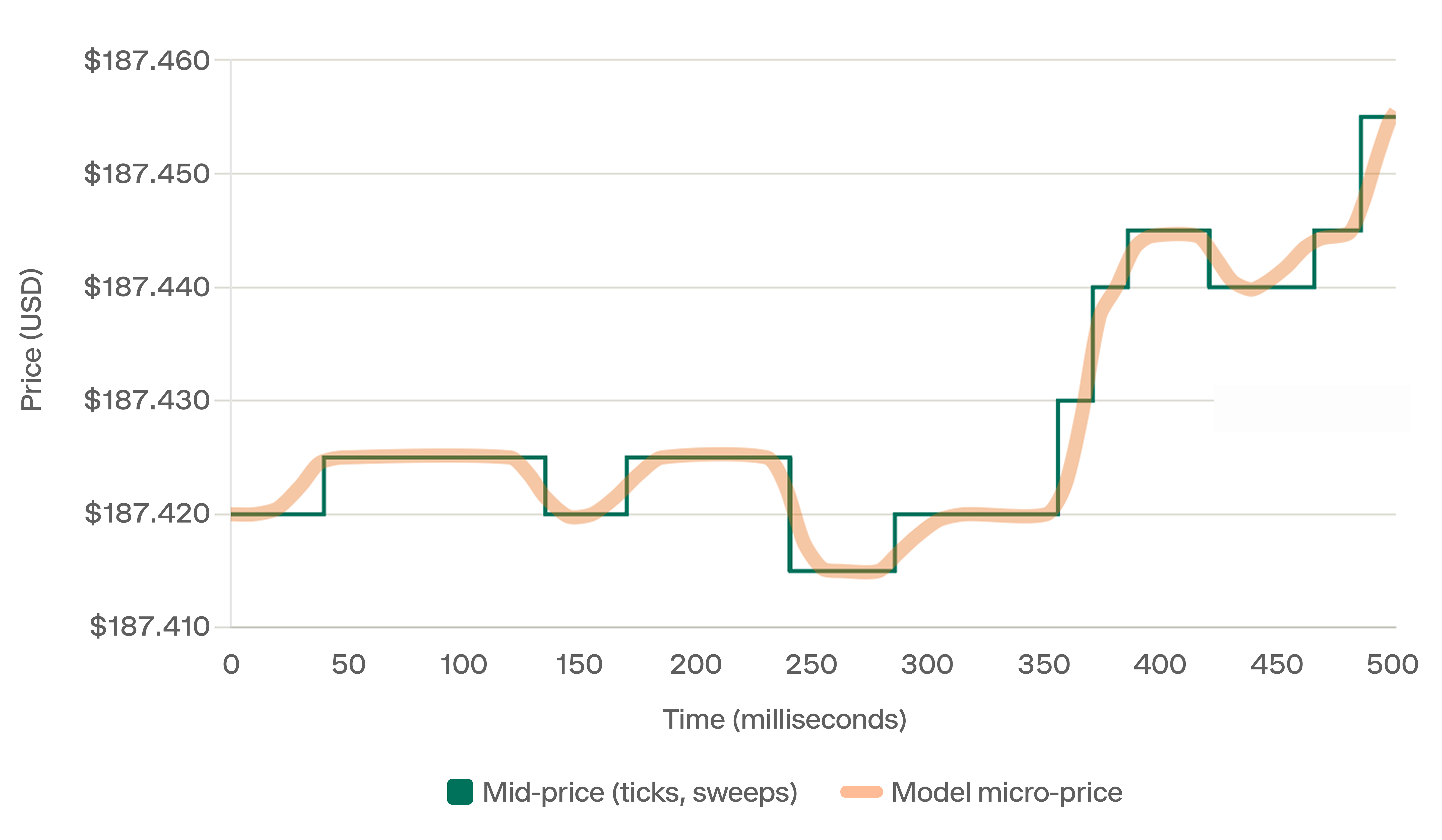
Illustrative. Quantitative trading models at the millisecond timescale (orange) can closely match micro-fluctuations in price (teal) today.
Bigger models swallow the smaller ones and then arbitrage their behavior. Short-term markets are an endless war of systems eating each other.
(There is an AI safety argument hiding in here. Alignment researchers theorize about ASIs containing ASIs. The quant shops got there first.)
However, these quant models break down quickly.
At short horizons, the system is mostly machines trading against machines.
At long horizons, the crowd returns.
2. The private markets will be public within a decade.
AI is beginning to contain the work of an analyst.
Much of finance isn’t about being better at valuation.
It’s a competition to acquire and process information.
Millions of financial analysts today screen data rooms, build models, spread comps, and turn fragmented evidence into investment decisions.
Historically, only a small number of firms had the manpower to do this at scale.
Private markets never had a good regulator.
Blackstone's real estate fund in 2022 is a canonical example. Its private portfolio stayed marked “at cost,” while a publicly traded portfolio with similar exposure crashed sharply, twice.
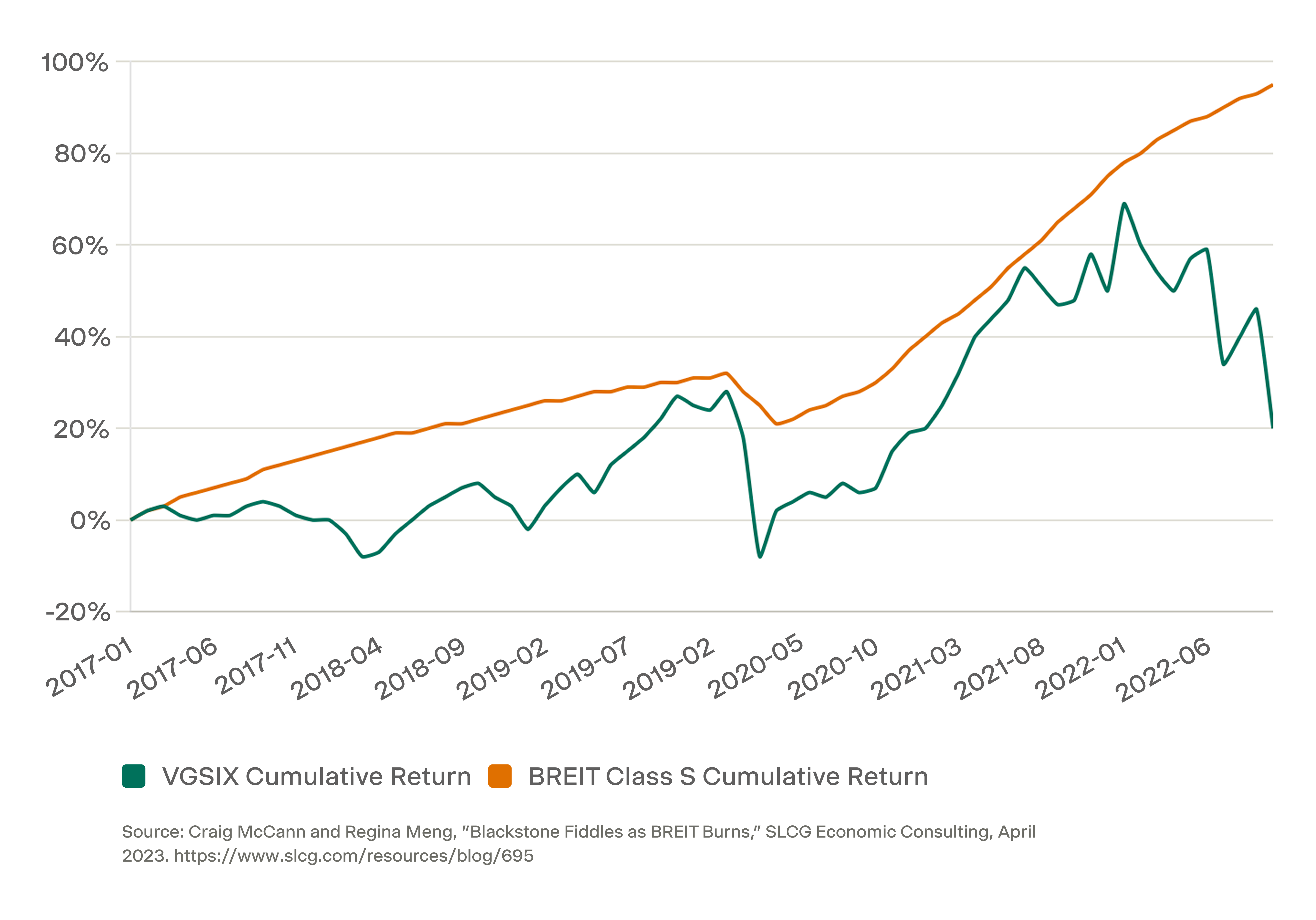
Private markets (orange) can sharply diverge from public analogues (teal).
We can only see this gap because a publicly traded analogue existed. Most private assets offer no such mirror.
That’s changing fast.
Models now read filings, credit agreements, and virtual data rooms. Agents now do the surrounding work: valuation, modeling, pulling comps, and creating slides. The analyst bottleneck is disappearing as you read this.
More investors create more bids.
More bids create more transactions.
More transactions improve price discovery, attracting more investors.
Private capital is finally getting a good regulator.
We’re already seeing it at Hebbia: funds are originating billions in off-market deals and saving hundreds of millions by trading out of positions early, before the market catches up.
The private markets will trade like public ones.
The ironic consequence is that the moment this happens, they still won’t be solved. AI will turn them into reflexive systems, bringing us back to the central question.
What happens when the model must contain the crowd?
3. The public markets won’t be solved by an LLM.
AI needs an entirely different model to contain the crowd.
People are waiting for Claude to beat the market for them.
It won’t happen.
While LLMs seem genuinely useful for fundamental analysis, fundamental analysis frequently fails because of reflexivity. Higher valuations from crowd dynamics can lower the cost of capital, which accelerates growth, and pushes valuations higher.
Reflexivity changes fundamentals.
So what AI can actually model the crowd?
3.1 Twitter modeled the crowd before Wall Street did.
One class of models already predicts, and shapes, human behavior better than any LLM.
“The newsfeed” already contains a near perfect model of human psychology. It influences elections, sets cultural trends, and models billions of people better than those people know themselves.
Social media ad servers work the same way. The ad for exactly what you were about to buy, often makes you want to buy it first. Note the reflexivity.
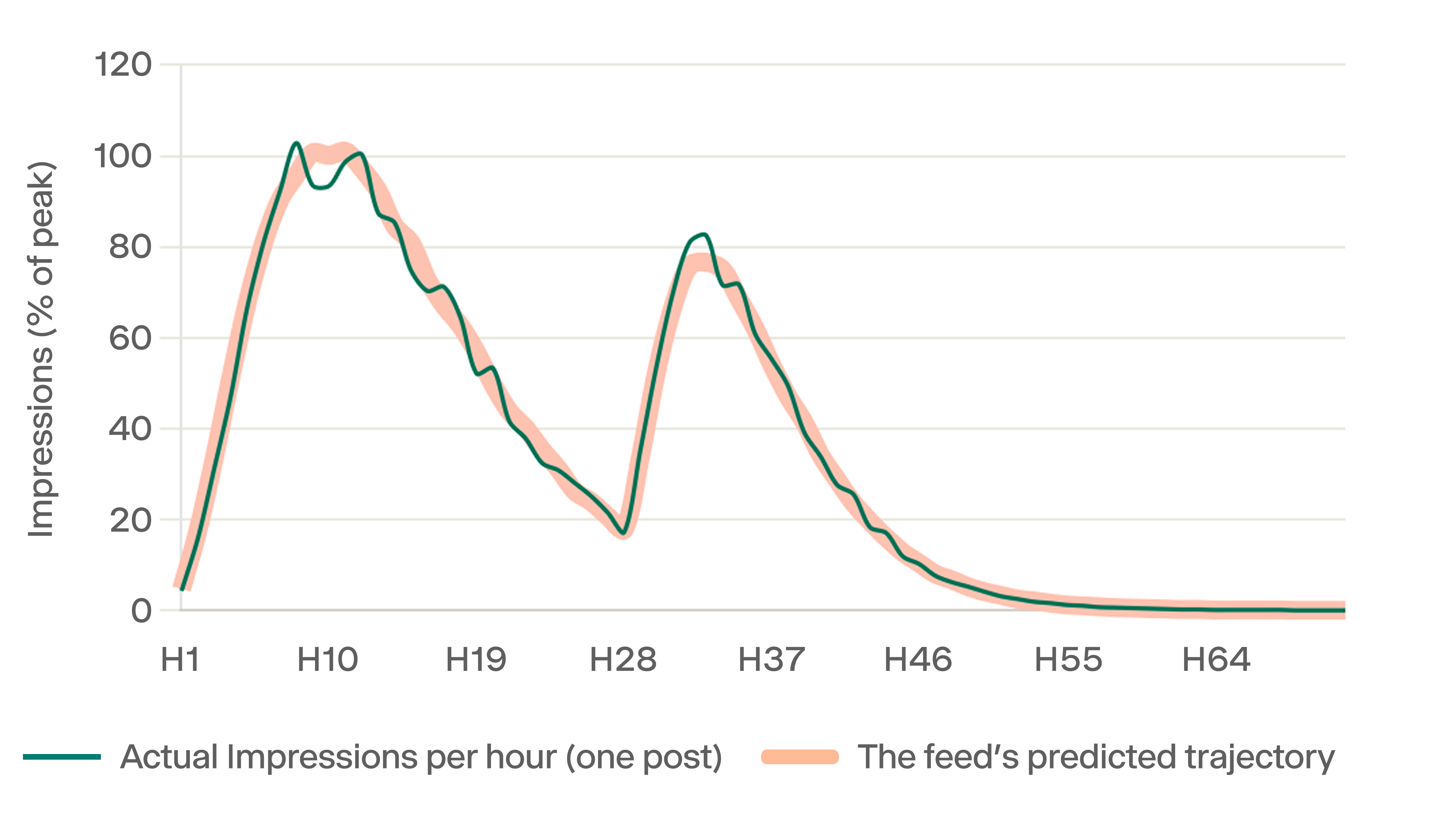
Newsfeeds' predicted relevance of a post (orange) can model and create actual engagement and relevance (teal).
This yields an unusual corollary:
xAI is the best-positioned finance lab on earth.
Grok sits on the rare dataset that captures the crowd in real time.
The feed already moves markets.
For retail investors, attention already matters more than fundamentals. Increasingly, every stock is a meme stock, and the feed controls the memes.
The logical endpoint is sobering. A future system can predict the crowd's reaction, generate the winning narrative, then distribute it through bot "investors" to pump its own holdings. The line between a great marketing campaign and market manipulation is already thin, and post-singularity, it blurs.
Market manipulation is about to become a model capability.
3.2 The model must contain the market.
Simulation startups are scratching at this problem but won’t solve reflexivity. Synthetic crowds that never touch a real price are focus groups in a box.
Prediction markets escape it too. The odds of rain can't change the weather.
A true reflexivity model must do two things:
- Contain the other regulators. It must predict how the market reacts, and stay one step ahead.
- Contain its own impact. Historical data can’t reveal the effect of an investor that never existed. The model must trade, observe what it changes, and update itself.
These models are already moving from training to trading.
But there’s a catch: AI can only learn a stable strategy while its trades stay small enough not to move the market.
Academics call this a convergence constraint.
Traders call it a familiar maxim:
“Size kills the trade."
That won’t stop what’s coming.
Machines that beat the market will spread from milliseconds to minutes, days, quarters, and years.
It will be futile to trade against the machine.
The floodgates are opening.
Every market will be dominated by machines.
Every company will compete with AI.
Our organizations must change accordingly.
Quant firms were the first to restructure around this new reality. Their org charts became systems for collecting, cleaning, structuring, and modeling enormous amounts of data. They became good regulators of their markets.
Every company is about to face the same transformation.
The most important job of the future will be teaching machines the structure of the world.
You can't short the singularity.
You can only become part of it.
Many thanks to Manny Roman, Rob Goldstein, Marty Chavez, Bob Steele, Will Manidis, and Lenny Rachitsky for improving my model of this system.


