
11 Best Financial Risk Management Software Tools for Credit, PE, and IB
Finance professionals are flooded with due diligence documents, leaving 46% overwhelmed by the sheer volume of data and trapped using generic governance, risk, and compliance (GRC) tools that lack the precision required for high-stakes work. This technical deficit forces a dangerous, costly trade-off. Teams must either waste critical hours on repetitive manual reviews or risk a minor, missed error that could trigger catastrophic financial and reputational damage.
To close this gap, the industry is rapidly shifting toward automation, with 73% of finance professionals already deploying AI on live deals and investments, and 78% reporting that their trust in AI-driven financial analysis has grown over the past year.
This guide evaluates specialized, finance-grade risk management software designed to eliminate manual bottlenecks. Each platform below offers the precise insights investment banking, private equity, and credit teams need to secure a measurable competitive advantage.
What Is Financial Risk Management Software?
Financial risk management software helps finance teams identify and mitigate risks across market positions, credit exposures, and operational workflows. While general risk management software for business is built around governance and policy compliance, specialized financial risk tools are designed for investment banking and credit teams, as well as private equity teams.
Modern finance teams use AI and financial risk management tools to:
- Process unstructured data at scale: AI handles the risk embedded in documents from data rooms, SEC filings, credit agreements, and internal memos that would take weeks to review manually.
- Deliver precise, cited answers: Teams can ask specific questions across their entire document base and get answers in seconds, complete with citations they can verify immediately.
- Connect all your data: These tools link structured data (financial metrics) with unstructured content (contract language, call transcripts) into one searchable knowledge base.
- Surface hidden patterns: Risk management software helps teams identify critical information and risk signals impossible to find through manual review.
Best Financial Risk Management Software at a Glance
Below are our top financial risk management platforms, organized by what they do best. Some are built for AI-powered deal work and diligence, others for quantitative financial modeling, treasury ops, or enterprise-wide compliance.
Use this list to find the tools that fit your team's workflows.
Name | Primary user | Best for | Key features |
|---|---|---|---|
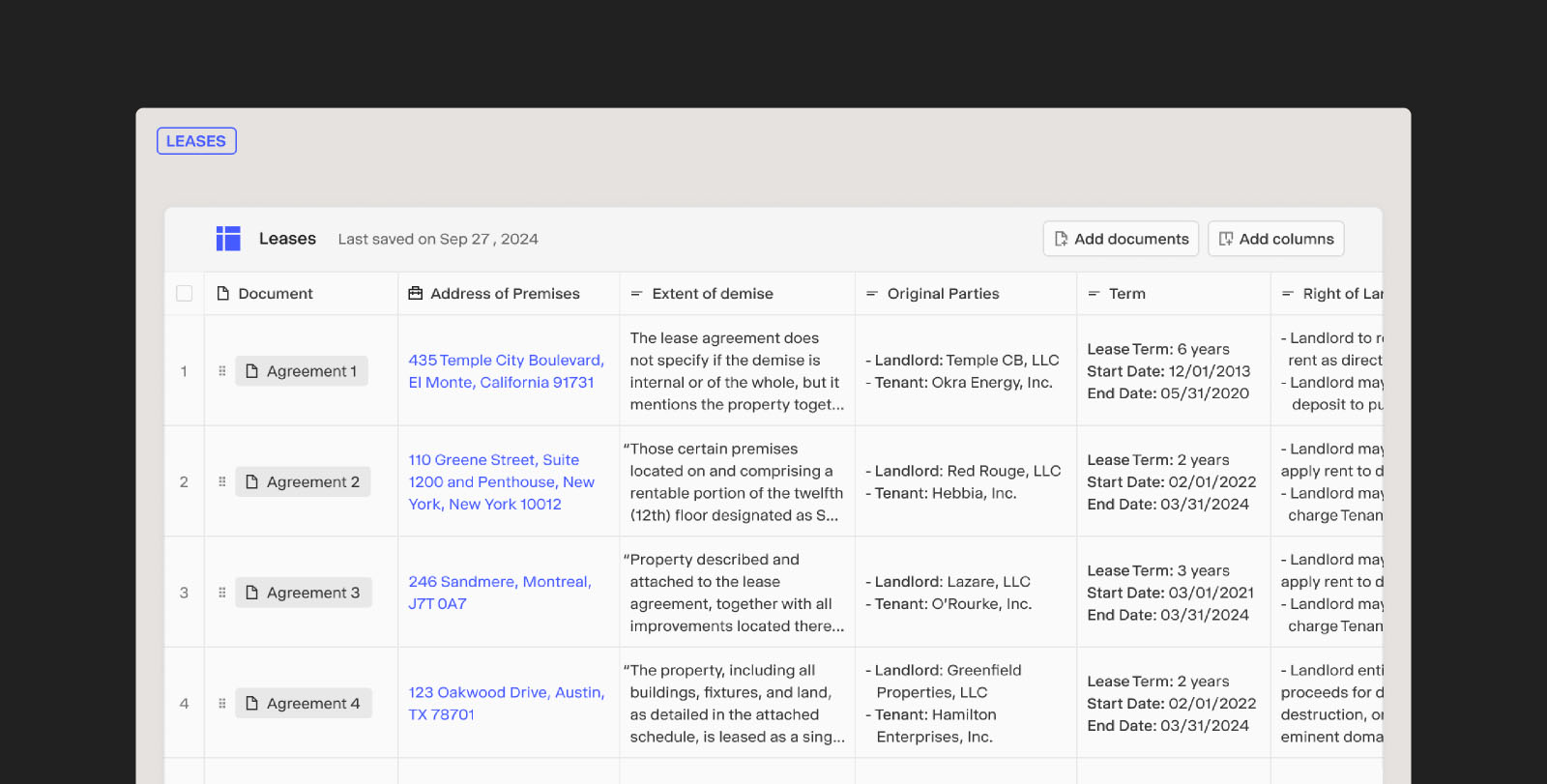
Hebbia | Investment and deal-focused finance professionals | AI-powered document risk, diligence, and investment decision support | - Breadth across research, workflow automation, firm collaboration, and finance integrations - Institutional-scale document intelligence with sentence-level citations - Forward-deployed team that configures Hebbia’s platform around your workflows - Enterprise-grade security, audit trails, and permissioning |
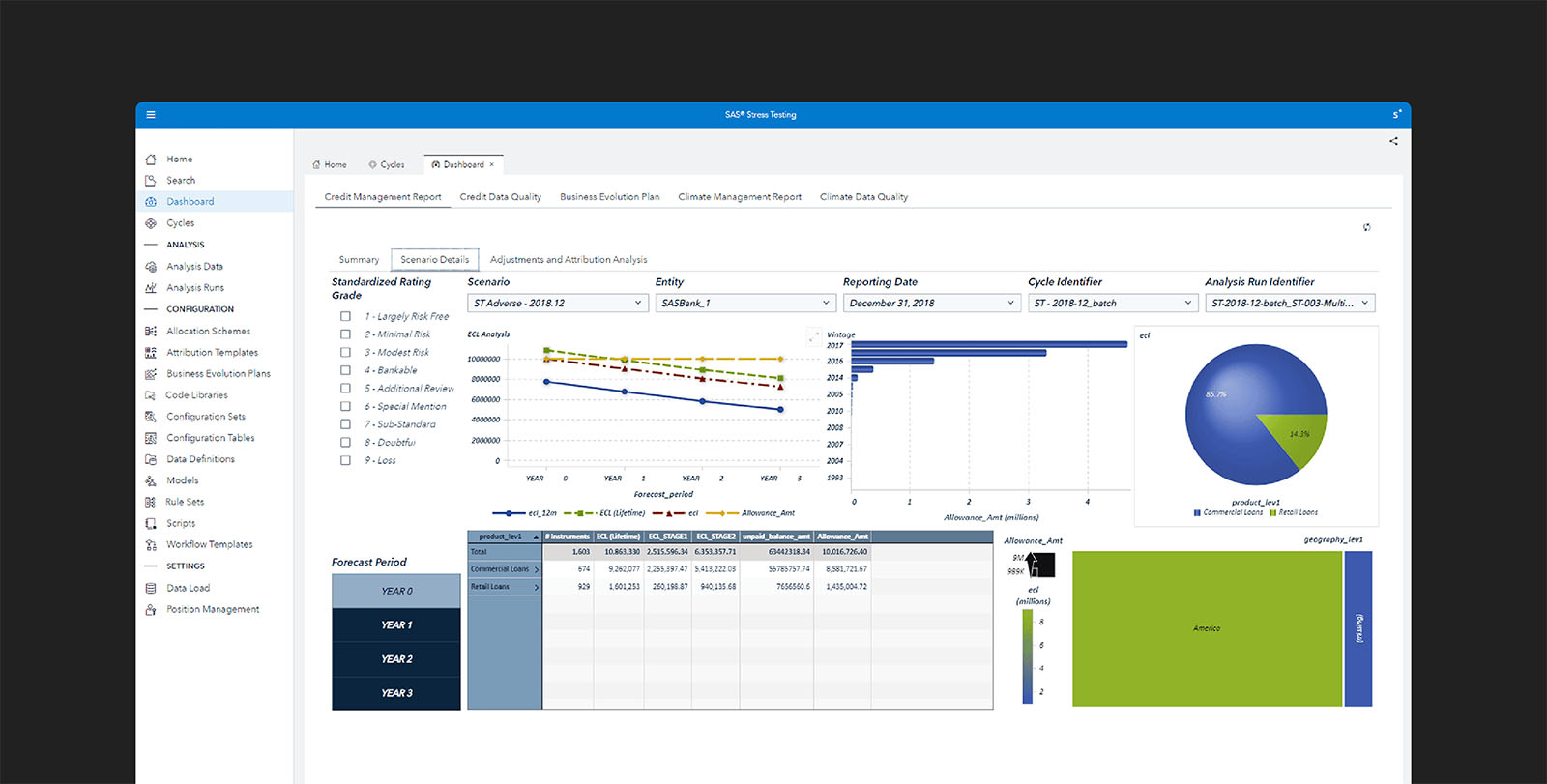
SAS Risk Management | Banks and financial institutions | Bank-grade quantitative risk, regulatory capital, and stress testing | - High-performance risk computation and stress-testing - Advanced quantitative methodologies - Support for regulatory compliance and reporting |
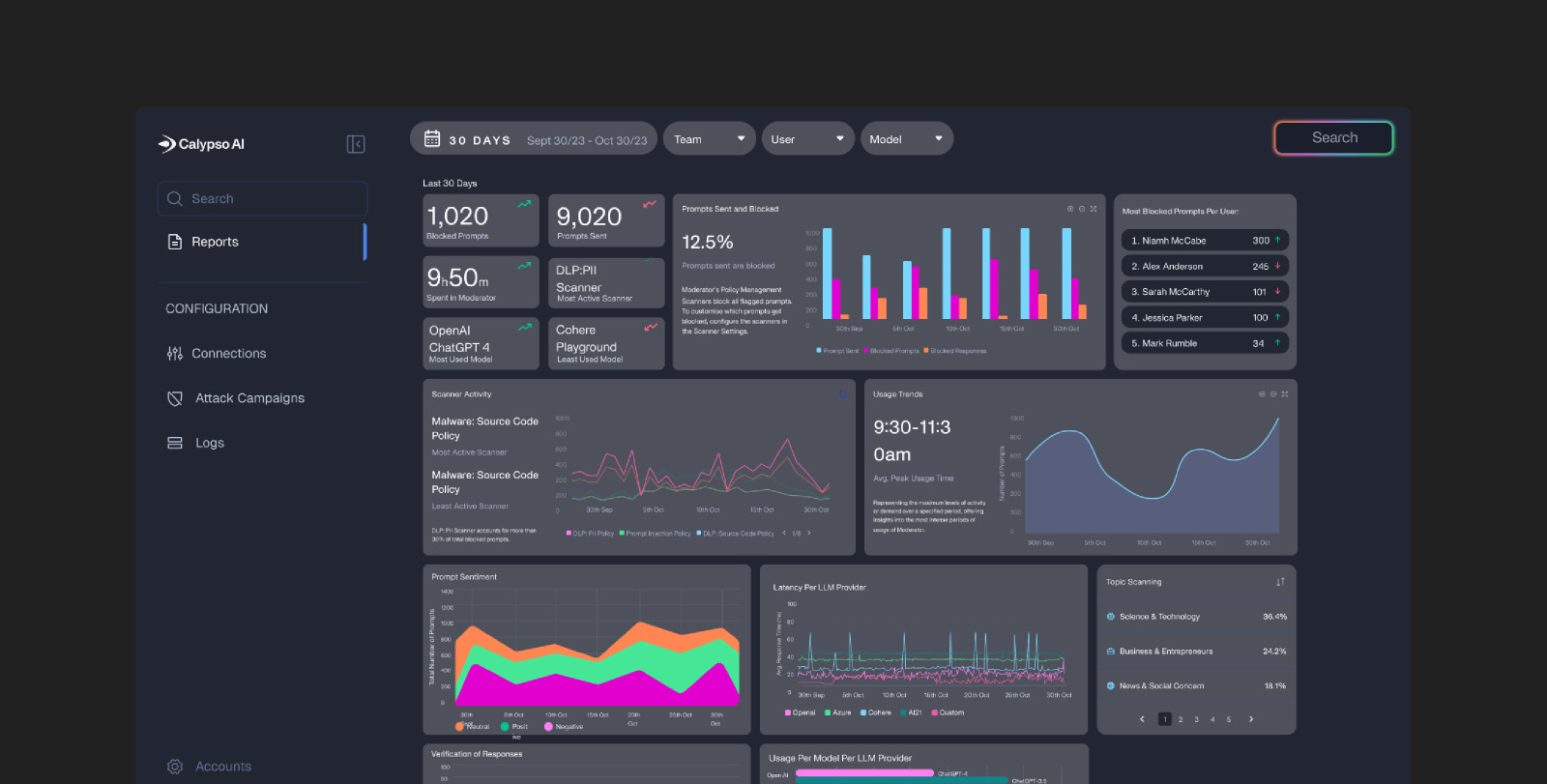
Nasdaq Calypso | Trading desks and risk managers at banks and asset managers | Front-to-back trading, treasury, and cross-asset risk | - Integrated platform for front-to-back office and risk control - Comprehensive coverage for complex derivatives and fixed income - Real-time analytics for risk and profit and loss (P&L), as well as compliance |
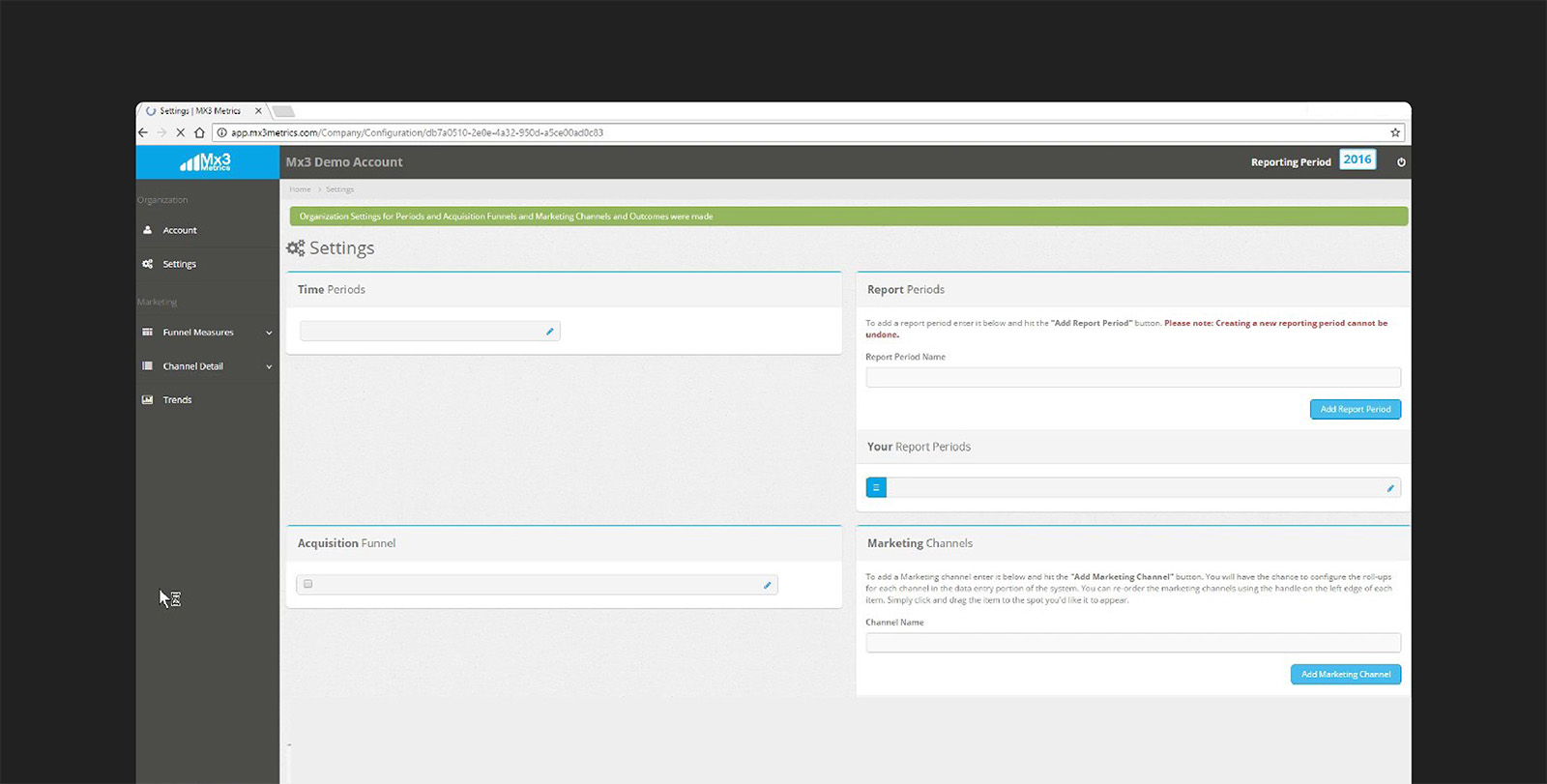
Murex (MX.3) | Large banks and broker-dealers | Enterprise market risk, counterparty risk, and regulatory workflows | - Single, cross-asset platform for front-to-back risk processing - Centralized, real-time limits and exposure monitoring - Prepackaged regulatory compliance for FRTB, SA-CCR, and Initial Margin |
Kyriba | Corporate treasurers at multinational companies | Liquidity, FX, and balance-sheet risk management | - Advanced cash forecasting and liquidity performance - Global bank connectivity and payments network - Integrated Foreign Exchange (FX) and interest rate risk hedging |
FINCAD Analytics Suite | Quants, risk analysts, and middle-office teams at banks and asset managers | Derivatives valuation, model validation, and fixed-income risk analytics | - Industry-leading analytics library with over 2,000 pre-configured functions - Transparent and scalable models for complex instruments - Independent verification, model validation, and rapid application development |
HighRadius | Credit managers and accounts receivable teams at B2B companies | B2B credit decisioning and order-risk management | - AI-powered prediction and prevention of blocked orders - Automated integration with 35+ credit agencies - Automated financial statement extraction from public and private sources |
D&B Finance Analytics | Credit risk teams | Third-party creditworthiness and portfolio monitoring | - Access to D&B's global commercial database, D&B PAYDEX® Score, Delinquency Predictor Score, and Failure Score - Comprehensive reporting on legal events, bankruptcies, and liens - Maximum Credit Recommendation to determine risk-appropriate credit limits |
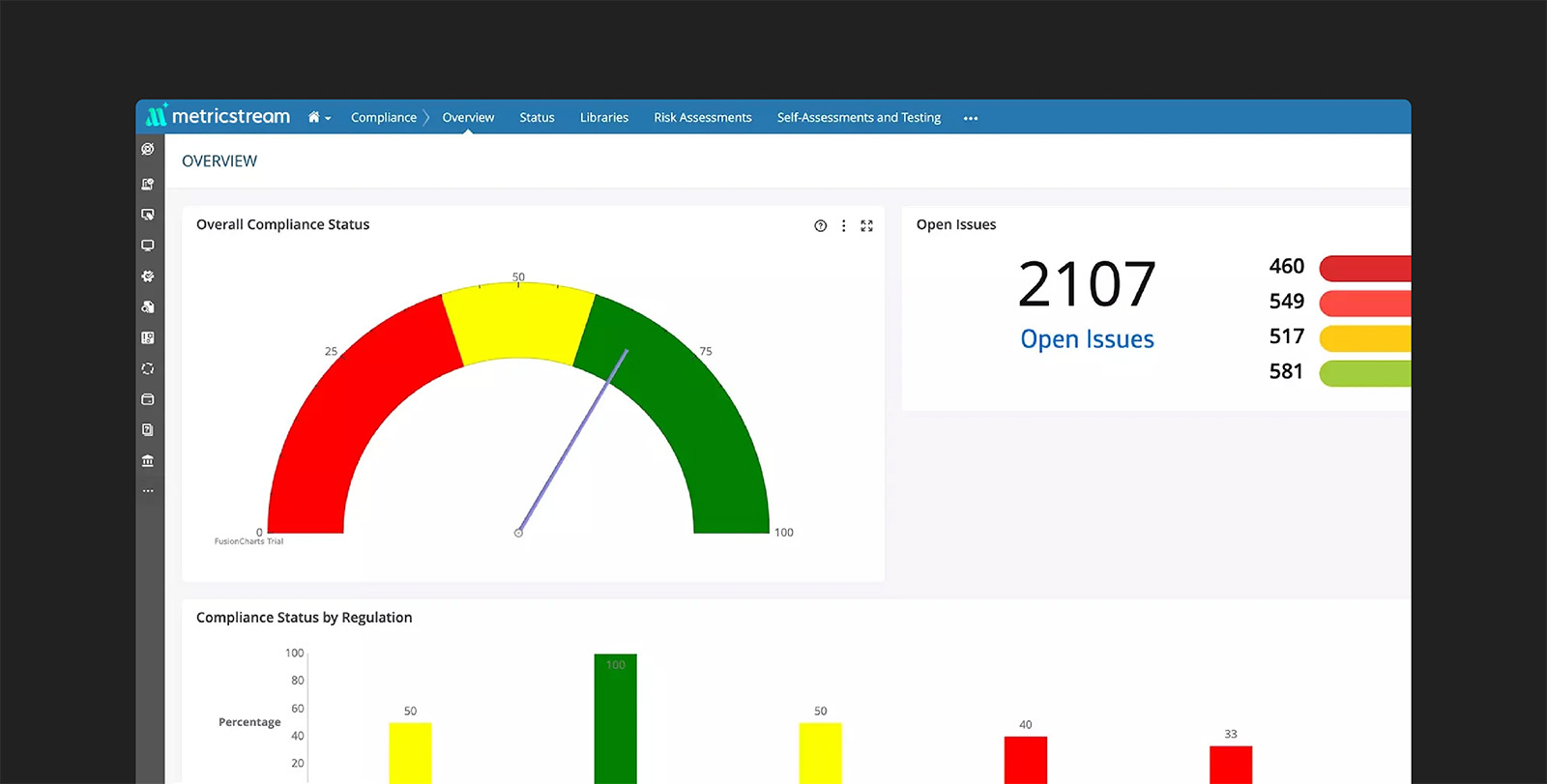
MetricStream ConnectedGRC | Broad enterprise | Enterprise GRC, third-party risk, and resilience programs | - AI-powered Connected GRC platform - Centralized management of KRIs (Key Risk Indicators) and KCIs (Key Control Indicators) - Strong focus on third-party, cyber, and operational resilience |
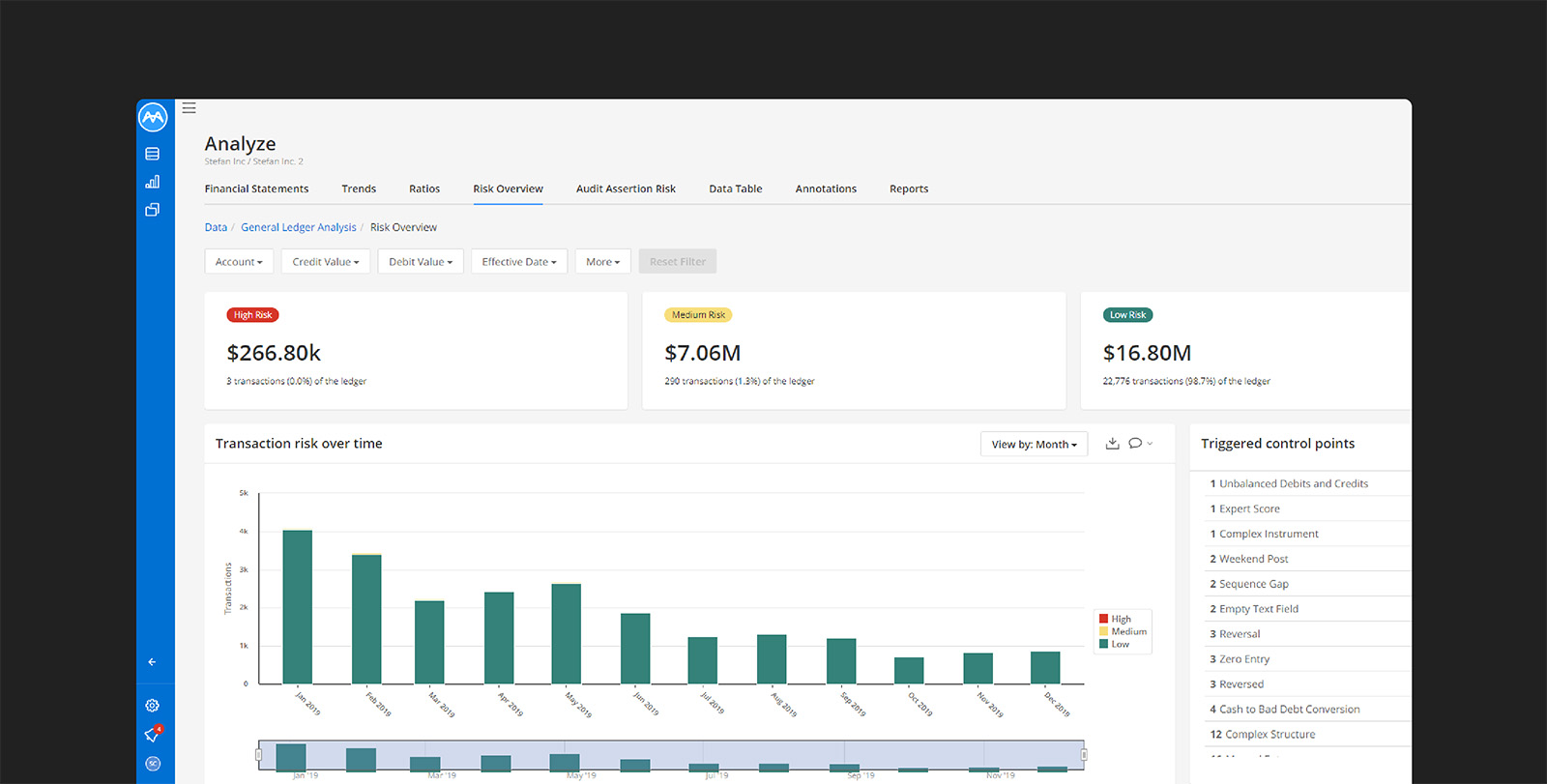
MindBridge | Broad enterprise | Anomaly detection and full-population financial analytics | - Combines statistical tests, machine learning, and deep learning - Prioritizes high-risk transactions - Features transparent, explainable AI |
Oracle Financial Services Analytics | Banks and financial institutions | Enterprise-wide credit, market, and liquidity risk analytics | - Unified analytics across credit, market, and liquidity risk - Shared data models for regulatory capital reporting - Coverage across banking and trading books |
1. Hebbia
Best for: AI-powered document risk, diligence, and investment decision support
No AI provider in finance is used more widely than Hebbia, which works with the world’s leading institutional investors and banks. Hebbia is built for the rigor of institutional finance and engineered for high-stakes deal workflows.
Where generic AI tools break down under document complexity and firm-wide compliance requirements, Hebbia processes thousands of private documents at once while automating workflows and compounding intelligence. The platform's success is grounded in Matrix, the engine that runs multi-step analysis across your entire document base and returns structured answers with sentence-level citations.
For risk teams, our accuracy bar sets the standard: 58% of U.S.-based finance professionals agree that AI must be completely accurate before they will use it in high-stakes work. As investment risk management software, Hebbia is built to meet that standard, with every output cited and traceable to the source document.
Key features:
- Agentic chat that builds dashboards, audio briefings, and cited charts: Hebbia Max, Hebbia's most advanced AI agent, ensures every answer includes sentence-level citations. On request, Max turns results into live HTML dashboards, audio briefings for overnight diligence or covenant monitoring, and charts that never transform or invent the underlying numbers.
- Breadth across research, workflow automation, collaboration, and finance integrations: Hebbia spans conversational research and autonomous agents, with native connections to CapIQ, FactSet, PitchBook, and DealCloud, so every workflow your team runs lives in one place.
- Institutional-scale document intelligence with sentence-level citations: The platform reasons across thousands of documents at once and backs every answer with sentence-level citations, delivering the depth and traceability that high-stakes decisions demand.
- Forward-deployed team that configures Matrix around your workflows: Former finance practitioners and engineers deploy alongside your team, building to your exact processes and encoding your firm's judgment into reusable agents and skills.
- Enterprise-grade security, audit trails, and permissioning: SOC 2 Type II and ISO certifications, AES-256 encryption, role-based access controls, and full audit trails keep sensitive deal data governed and permissioned.
2. SAS Risk Management
Best for: Bank-grade quantitative risk, regulatory capital, and stress testing
SAS Risk Management handles the heavy computational work banks need for regulatory capital calculations. Institutions use it to run stress test scenarios, model credit and market risk at portfolio scale, and generate the audit-ready reports regulators demand. The platform handles quantitative depth, including Monte Carlo simulations and loss forecasting across entire balance sheets.
Reviewers praise its computational power and regulatory framework coverage, though many note it requires significant technical expertise and lengthy implementation timelines.
Key features:
- High-performance risk computation and stress-testing: SAS runs portfolio-wide stress tests modeling how market shocks affect capital adequacy, with parallel processing that handles millions of calculations for daily monitoring and quarterly filings.
- Advanced quantitative methodologies: The system includes pre-configured models for credit scorecards, market risk, and operational loss that align with regulatory frameworks, as well as a programming environment for custom models.
- Support for regulatory compliance and reporting: SAS generates audit-ready reports for Basel accords, stress testing programs, and IFRS 9, maintaining detailed logs of model versions and calculation steps for regulatory reviews.
3. Nasdaq Calypso
Best for: Front-to-back trading, treasury, and cross-asset risk
Nasdaq Calypso provides an integrated platform that connects front-office trading, middle-office risk management, and back-office operations in a single system. Trading desks use it to price and execute complex derivatives, track exposures, calculate profit and loss (P&L), and manage settlement workflows. The platform eliminates the fragmentation that typically exists when teams work in separate systems.
The platform's strength lies in its real-time analytics and cross-asset trading capabilities. However, several reviewers point out that tailoring Calypso to specific workflows demands considerable technical investment.
Key features:
- Integrated platform for front-to-back office and risk control: Calypso unifies trade execution, position management, risk calculation, and settlement processing in one system, eliminating data reconciliation issues between trading and operations teams.
- Comprehensive coverage for complex derivatives and fixed income: The platform handles pricing and risk analytics for interest rate swaps, credit derivatives, exotic options, and structured products across multiple asset classes.
- Real-time analytics for risk, P&L, and compliance: Calypso calculates risk metrics and regulatory exposure limits as trades execute, giving risk managers immediate visibility into portfolio positions.
4. Murex (MX.3)
Best for: Enterprise market risk, counterparty risk, and regulatory workflows
Large banks use MX.3 to connect their trading desks with their risk teams and compliance operations in one system. Instead of managing derivatives and operations on separate platforms, everything is run through MX.3. This provides the bank with a unified view of positions, risk exposure, and regulatory requirements in real time.
Users appreciate Murex's depth of functionality and regulatory compliance tools, particularly for complex derivatives workflows, though the platform requires significant implementation effort and ongoing specialist support.
Key features:
- Single, cross-asset platform for front-to-back risk processing: MX.3 handles trade capture, valuation, risk analytics, and settlement across equities, fixed income, foreign exchange, commodities, and derivatives in one integrated system.
- Centralized, real-time limits and exposure monitoring: The platform tracks credit limits, market risk limits, and counterparty exposures as trades execute, automatically flagging when positions approach or breach pre-set thresholds.
- Prepackaged regulatory compliance for FRTB, SA-CCR, and Initial Margin: MX.3 includes built-in calculation engines for fundamental review of the trading book (FRTB), standardized approach for counterparty credit risk (SA-CCR), and initial margin requirements under uncleared margin rules (UMR), reducing the development work needed for regulatory compliance.
5. Kyriba
Best for: Liquidity, FX, and balance-sheet risk management
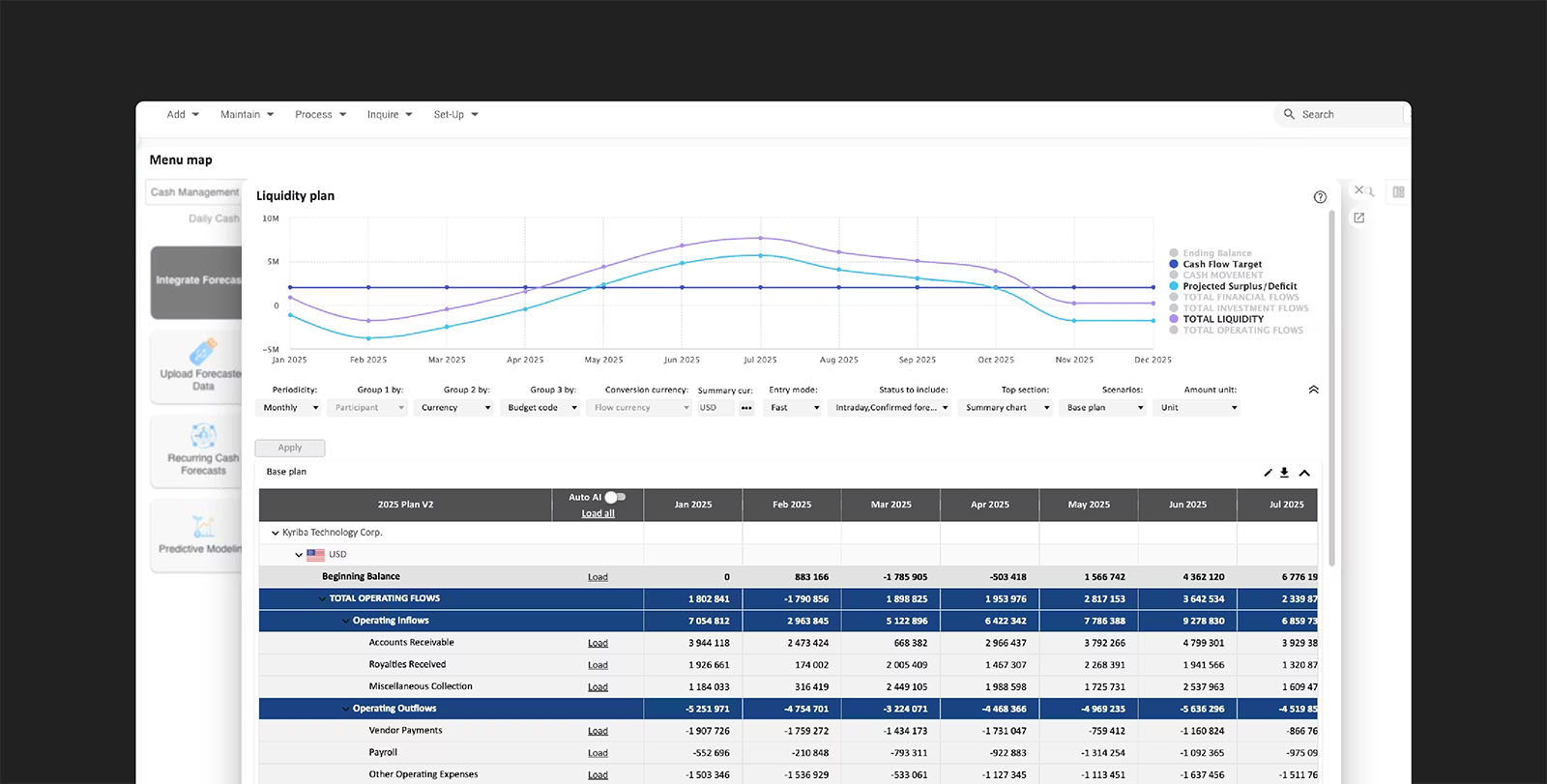
Kyriba is a treasury management platform that consolidates global cash operations for multinational corporations, from tracking bank balances across dozens of countries to forecasting liquidity and hedging currency risk. The platform eliminates the manual data gathering and forecasting that treasurers would otherwise use to manage cash flows and execute foreign exchange hedges across multiple banking partners.
Reviewers value Kyriba's ability to provide real-time visibility into global cash positions and its accurate multi-week forecasting, which helps treasurers optimize working capital and avoid costly short-term borrowing. Implementation requires coordination across banking partners and financial systems, though reviewers report significant time savings once deployed.
Key features:
- Advanced cash forecasting and liquidity performance: Kyriba analyzes historical cash flow patterns and integrates accounts receivable, accounts payable, and operational data to predict future liquidity needs, helping treasurers optimize working capital and avoid unnecessary borrowing.
- Global bank connectivity and payments network: The platform connects directly to over 1,000 banks worldwide through standardized formats, such as SWIFT, enabling treasurers to view balances, initiate payments, and reconcile transactions across all accounts from a single interface.
- Integrated FX and interest rate risk hedging: Kyriba tracks currency exposure across subsidiaries and recommends hedging strategies, then executes FX forwards and options directly through the platform to lock in exchange rates and manage interest rate risk.
6. FINCAD Analytics Suite
Best for: Derivatives valuation, model validation, and fixed-income risk analytics
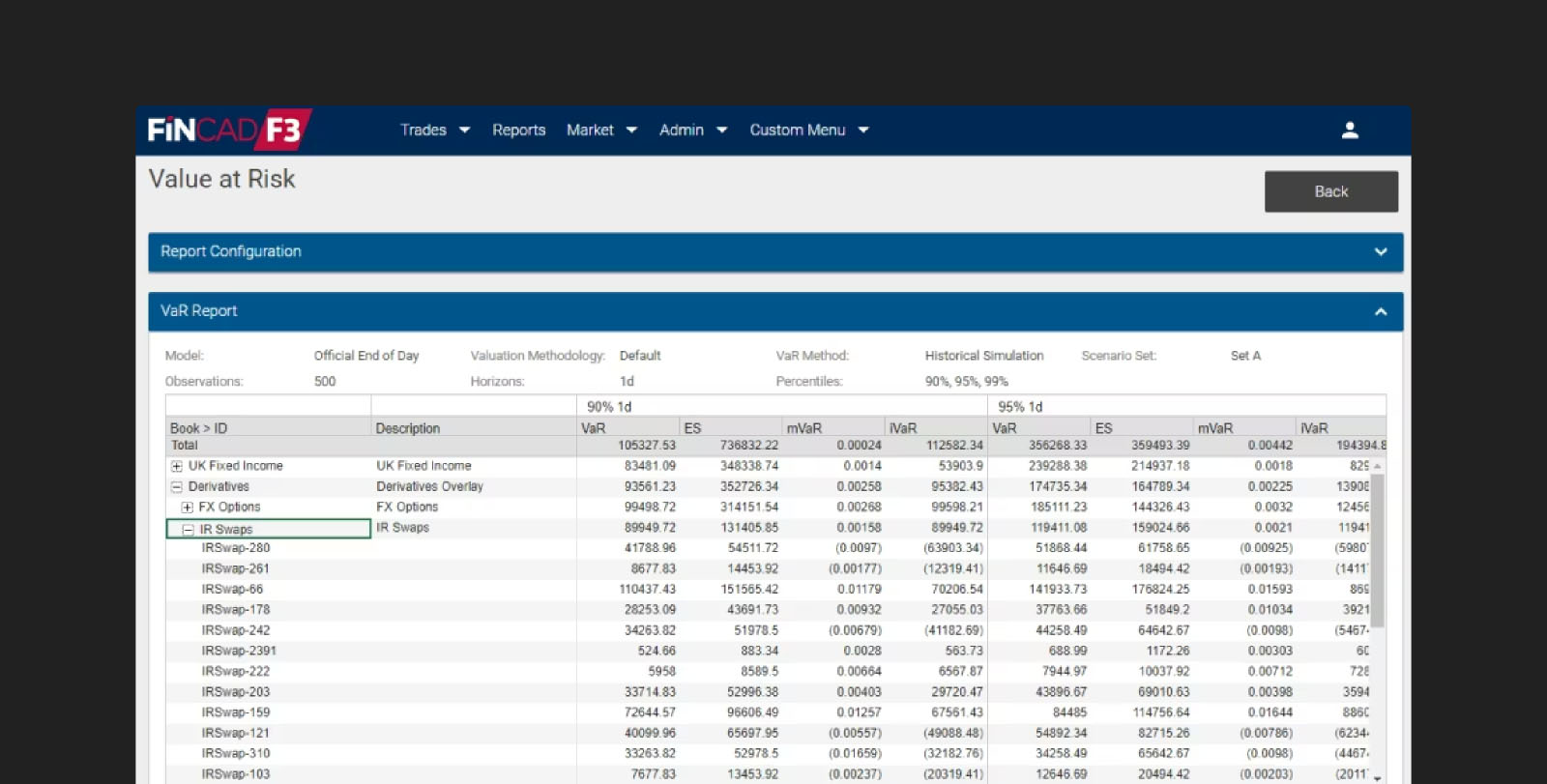
FINCAD Analytics handles the complex math behind pricing exotic derivatives and structured products that standard trading systems can't value accurately. Banks and asset managers use it when they need to independently verify front-office pricing or build custom valuation models for instruments like convertible bonds, interest rate exotics, and structured notes.
The platform's strength is transparency—unlike black-box trading systems, FINCAD shows exactly how it calculates each price, which is critical for risk teams conducting independent checks and model validation.
FINCAD's library and model transparency receive strong praise from users who need to understand exactly how it calculates valuations. But note that the platform requires quantitative expertise to use effectively, since it's built for professionals who understand the mathematics behind derivative pricing rather than general business users.
Key features
- Industry-leading analytics library with over 2,000 pre-configured functions: FINCAD provides ready-to-use pricing and risk functions for everything from vanilla options to complex structured products, covering calculations like Greeks, credit valuation adjustments (CVA), and scenario analysis across asset classes.
- Transparent and scalable models for complex instruments: Unlike proprietary trading systems that hide pricing logic, FINCAD exposes the mathematical models and assumptions behind each calculation, allowing risk teams to verify methodology and adjust parameters for specific instruments.
- Independent verification, model validation, and rapid application development: Risk management teams use FINCAD to independently verify front-office valuations, satisfy model validation requirements for regulators, and build custom pricing applications by combining pre-built functions rather than coding models from scratch.
7. HighRadius
Best for: B2B credit decisioning and order-risk management
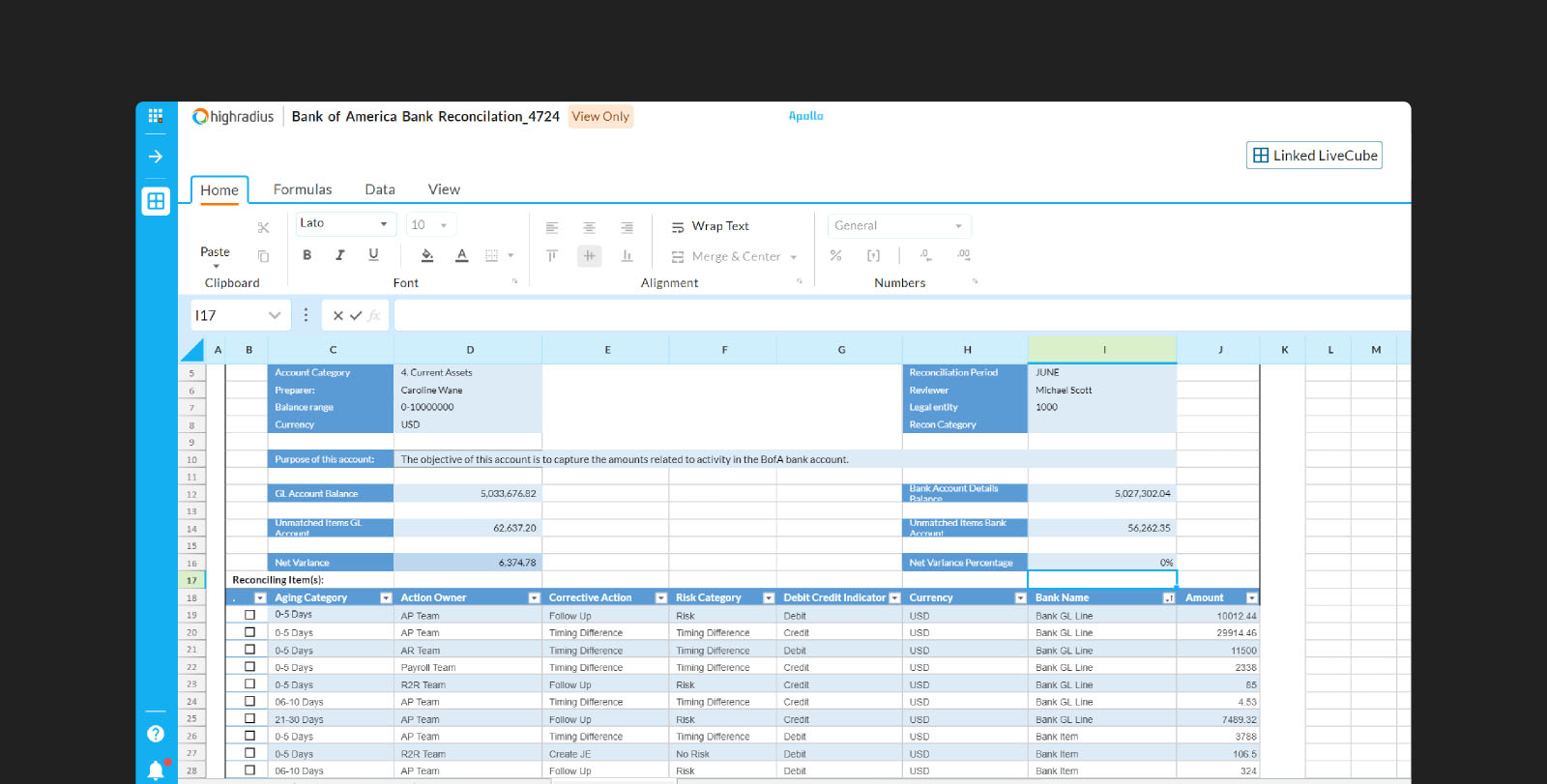
HighRadius automates the credit assessment and order approval process for companies selling to other businesses on credit terms. Credit teams use it to evaluate customer creditworthiness and set credit limits while preventing orders from being blocked due to payment risk, all without manual review of financial statements and credit reports.
The platform is designed for high-volume B2B operations where credit decisions must happen quickly to prevent delays in shipments and avoid customer frustration.
Users report significant reductions in blocked orders and faster credit decision cycles. Some note that the platform works best for companies with standardized credit policies, as heavily customized approval workflows may require additional configuration.
Key features:
- AI-powered prediction and prevention of blocked orders: HighRadius analyzes payment history, credit utilization, and external credit data to predict which orders are likely to cause payment issues, automatically approving low-risk transactions and flagging high-risk ones for review before they're blocked.
- Automated integration with 35+ credit agencies: The platform pulls credit reports and monitoring alerts from Dun & Bradstreet, Experian, Equifax, and other agencies automatically, minimizing manual lookups and ensuring credit decisions use the most current data.
- Automated financial statement extraction from public and private sources: This software extracts key financial metrics from SEC filings for public companies and uses AI to parse financial statements from private customers, automatically updating credit assessments when financial health changes.
8. D&B Finance Analytics
Best for: Third-party creditworthiness and portfolio monitoring
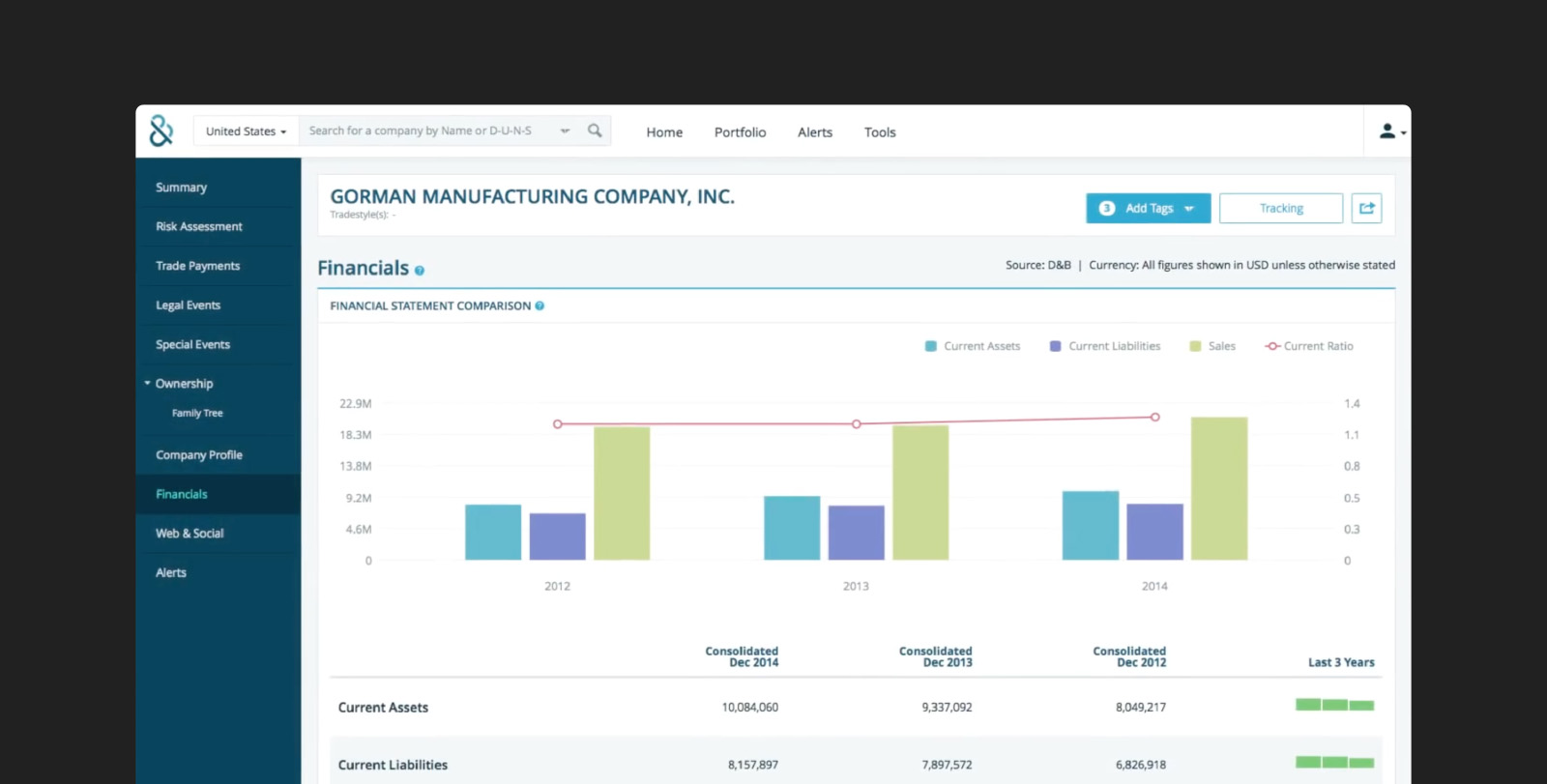
D&B Finance Analytics provides access to Dun & Bradstreet's global commercial database, which tracks payment behavior, financial health, and legal events for millions of businesses worldwide.
Companies use it to assess whether potential customers will pay on time, evaluate supplier stability before signing contracts, and monitor existing relationships for signs of financial distress. The platform serves as a primary data source for credit decisions, particularly when evaluating privately-held companies that don't publish financial statements.
Users value D&B's extensive business coverage and proprietary scoring models, such as PAYDEX, which tracks actual payment patterns rather than just financial ratios. The data quality is generally strong for established businesses; however, some reviewers note that coverage can be limited for newer companies or those operating in specific international markets.
Key features:
- Access to D&B’s global commercial database, D&B PAYDEX® Score, Delinquency Predictor Score, and Failure Score: D&B provides multiple risk scores based on real payment data. PAYDEX tracks how promptly companies pay bills, while the Delinquency and Failure scores predict the likelihood of severe payment problems or business closure over the next 12 months.
- Comprehensive reporting on legal events, bankruptcies, and liens: Credit teams receive alerts when judgments, tax liens, UCC filings, or bankruptcy proceedings are filed against a company, surfacing financial distress signals before they appear in payment patterns.
- Maximum Credit Recommendation to determine risk-appropriate credit limits: Instead of setting credit limits from scratch, credit managers get D&B's recommended limit calculated from the company's financial strength, historical payment behavior, and industry benchmarks.
9. MetricStream Connected GRC
Best for: Enterprise GRC, third-party risk, and resilience programs
Large enterprises face risks across dozens of domains, including cybersecurity threats, vendor failures, operational breakdowns, and regulatory violations, which are traditionally managed in separate systems by different departments. MetricStream connects risk management, compliance, and audit in a single platform, enabling organizations to monitor risk indicators across business units and demonstrate compliance with SOX, GDPR, and industry-specific regulations.
Users value the comprehensive visibility MetricStream provides, particularly for board-level reporting on enterprise risk posture. However, several reviewers note that unifying multiple risk domains and establishing consistent workflows across departments requires substantial organizational coordination during the implementation process.
Key features:
- AI-powered Connected GRC platform: MetricStream uses AI to identify risk patterns across various domains, flagging situations like vendor performance issues that correlate with cybersecurity gaps or control failures appearing in multiple business units simultaneously.
- Centralized management of KRIs (Key Risk Indicators) and KCIs (Key Control Indicators): Organizations can define and track KRIs (metrics that signal emerging threats) and KCIs (measures of control effectiveness) across all risk domains from a single dashboard, replacing fragmented spreadsheets and departmental tracking systems.
- Strong focus on third-party, cyber, and operational resilience: The platform features specialized modules for vendor risk assessments, cybersecurity risk quantification, and business continuity planning—three areas where enterprise risk failures most commonly result in financial loss or regulatory penalties.
10. MindBridge
Best for: Anomaly detection and full-population financial analytics
MindBridge analyzes financial transactions to detect anomalies, fraud patterns, and compliance risks that traditional sampling methods might miss.
Audit teams upload general ledger data, bank statements, or accounts payable files, and the platform flags unusual patterns, like duplicate payments, unusual vendor relationships, off-hours transactions, or statistical outliers that warrant investigation. Rather than testing a small sample of transactions, auditors can examine 100% of the data while focusing their time on the highest-risk items MindBridge surfaces.
Users highlight the platform's ability to uncover risks that wouldn't appear in standard audit procedures, and they also appreciate its explainable AI approach. Some mention the system requires clean, well-structured data to perform optimally, and interpreting certain flags still demands audit expertise.
Key features:
- Combines statistical tests, machine learning, and deep learning: Statistical tests identify known anomaly patterns, while machine learning spots deviations from normal transaction behavior. Deep learning adds another layer, detecting sophisticated fraud schemes that change tactics over time.
- Prioritizes high-risk transactions: Auditors see transactions ranked by risk score rather than reviewing every flagged item. The platform surfaces the most suspicious activity first, like payments to new vendors that match amounts from legitimate suppliers or transactions that circumvent approval controls.
- Features transparent, explainable AI: Every flagged transaction comes with a clear explanation of why it triggered an alert, such as unusual timing, suspicious amount, questionable counterparty relationship, or departure from historical norms. This transparency allows audit teams to justify their findings instead of pointing to unexplained AI scores.
11. Oracle Financial Services Analytics
Best for: Enterprise-wide credit, market, and liquidity risk analytics
Oracle Financial Services Analytical Applications (OFSAA) provides banks and financial institutions with a unified analytics layer to measure risk across the entire balance sheet. The platform is built for scale and regulatory rigor, with prebuilt models and reporting aligned to Basel, IFRS 9, and CECL requirements.
From a shared data foundation, teams use OFSAA to calculate regulatory capital and run enterprise stress tests. Because risk and finance run on the same governed data, the numbers reconcile by design rather than through manual effort.
Key features:
- Unified analytics across credit, market, and liquidity risk: OFSAA measures exposures across all risk types, giving institutions one consistent view of enterprise risk instead of fragmented departmental models.
- Shared data models for regulatory capital reporting: A common data foundation feeds risk and finance calculations, so regulatory reports draw from the same governed source.
- Coverage across banking and trading books: The platform spans both banking-book and trading-book exposures, supporting capital and risk calculations for lending portfolios and market positions.
Benefits of Implementing Financial Risk Tools
In finance, small improvements compound: A 0.5% edge in conviction accuracy, a week saved in deal execution, or a single risk caught early can translate to millions in value.
The best financial risk management platforms deliver a competitive advantage that shows up in your firm's returns and win rates:
- Superior performance and competitive edge: The ultimate benefit is outperformance—moving faster than competitors and surfacing strategic insights others miss. When you can analyze every relevant document in hours instead of weeks, you reach conviction before the market does.
- Accuracy and trust (downside protection): AI-powered tools provide the accuracy at scale required in high-stakes finance. That matters when 46% of professionals struggle to extract information from multiple sources, and 38% struggle to search across disconnected systems. For legal teams, this means auditable decisions. Credit teams, however, require early warnings of eroding liquidity, refinancing risk, and approaching maturity walls.
- Efficiency: These platforms eliminate repetitive document review, data verification, and cross-referencing, freeing professionals to focus on analysis where their expertise matters. The time savings are substantial: six-week timelines for confidential information memorandums (CIMs) compress to days, strip profiles no longer require offshore review cycles, and covenant monitoring runs continuously instead of quarterly. Teams close more deals without proportional growth in headcount.
- Measurable outcomes and value: Beyond efficiency, risk management software surfaces net-new insights that inform investment and deal decisions, such as emerging portfolio risks, thematic merger and acquisition (M&A) opportunities, or competitive positioning that reshapes pitch strategies. The outcome is reflected in metrics your organization tracks, including basis points of outperformance, faster time-to-close, improved win rates, and market-beating returns that justify the platform investment many times over.
Top Financial Risk Management Use Cases
The platforms above solve real problems across different finance workflows. Here are four areas where the right software makes the biggest difference.
Due Diligence and IC Memo Creation (Private Equity)
PE analysts know the stakes: Miss a key data point in a virtual data room (VDR) or get something wrong in your investment committee (IC) memo, and you've jeopardized the deal and your reputation.
Effective financial risk software uses AI due diligence to cut through VDR chaos, extracting the necessary information for valuation and risk assessment. Instead of manually tracking down revenue numbers across management decks, audited statements, and board materials, risk management platforms automate the process, reconcile differences, and flag inconsistencies. Your IC memo gets done in days instead of weeks, and every claim has a citation that holds up under committee questioning.
Credit Covenant Monitoring and Downside Protection (Credit Analysts)
Credit analysis is fundamentally about protecting downside—your upside is capped, so avoiding losses is everything. Many loans carry fewer protective covenants than they used to, so risk builds quietly as liquidity erodes and debt comes due. A single clause about permitted debt or asset transfers can let a borrower move collateral out of your reach or push your claim behind others', and manual reviews mean you catch it too late.
The right platform reads these agreements, extracts every covenant and financial test, then monitors your portfolio companies continuously. No more quarterly spreadsheet exercises. The software flags deterioration and the debt capacity a borrower is building under permitted-debt and transfer baskets, giving you time to reprice, renegotiate, or exit before refinancing pressure hardens into a loss.
Client Deliverable Accuracy and Strip Profile Creation (Investment Bankers)
Accuracy is the ultimate hedge against reputational risk in high-stakes dealmaking. The traditional strip profile workflow—relying on offshore teams and manual data entry—is a liability; one overlooked discrepancy in a founder’s history or a misstated transaction metric can derail a pitch and permanently damage your firm’s credibility with a PE partner.
By pulling and cross-referencing data from PitchBook, LinkedIn, and regulatory filings, modern financial risk software ensures data integrity from the start. What used to require three days of high-risk review is now a secure, automated process that eliminates human error, protects your firm’s reputation, and ensures every deliverable is audit-ready.
Contract Review and Liability Management (Legal Professionals)
Lawyers are bound by their professional obligations to get things right. You can't risk a shortcut that creates liability, but you're drowning in repetitive NDAs, contract reviews, and clause extractions. The billable hour model means efficiency doesn't always help you personally, so tools need to make your day easier, not just faster.
The best platforms show you exactly which sections they analyzed, which clauses they extracted, and why they flagged something. This transparency is crucial because legal professionals must be able to defend every decision. When you're reviewing 50 vendor contracts for privacy clauses, the software pulls all the relevant language with specific citations, so you spot problems in minutes instead of days. And it fits into how you already work, with no learning curve and no new processes to figure out.
How To Choose a Financial Risk Management Solution
Choosing financial risk management software based on feature lists or price comparisons misses the point. Your decision should center on measurable outcomes that create genuine competitive advantages, like faster deal execution and better risk decisions.
Here's what actually matters when evaluating financial risk analysis software:
- Demand full transparency and trust: Look for platforms that show their work. Every answer should include in-line citations that you can verify immediately, eliminating the risk of AI hallucination. In high-stakes finance, where a single error can mean catastrophic loss, you need an auditable trail for every decision the software makes.
- Assess unstructured data capability at depth: Test whether tools can handle the complex private documents that matter, like VDRs full of inconsistent formatting, dense credit agreements, and internal memos. Most platforms claim document processing capabilities, but they may break down when faced with high volume and complexity.
- Optimize workflows for speed to insight: Evaluate if the solution can accelerate your core workflows (e.g., CIM creation, IC memo synthesis) from weeks to days, delivering speed to insight that creates a competitive advantage.
- Insist on seamless integration and output quality: Look for tools that work seamlessly with your existing systems (Excel, PowerPoint, internal databases) without forcing your team to learn new workflows or rebuild processes. If outputs need heavy editing or the software requires extensive training, it's creating friction instead of eliminating it.
- Choose strategic focus over generic GRC: Generic enterprise GRC platforms and general-purpose AI tools weren't built for how finance professionals actually work. They struggle with the document complexity, citation requirements, and output quality standards that define investment banking and credit analysis. Pick software designed for deal execution from the start.
How Hebbia Delivers the Future of Financial Risk Management
The biggest edge in finance today comes from financial risk management platforms built to handle unstructured data. Hebbia backs every answer with sentence-level citations, eliminating the risk of hallucinations and giving you the transparency required for high-stakes decisions.
With financial risk management software from Hebbia, investment banks generate client-ready materials in days instead of weeks. Credit analysts can continuously monitor covenant compliance, and PE teams can build IC memos using verified, cited data points. And because a forward-deployed team of engineers configures the platform around your workflows, that intelligence compounds across every diligence cycle instead of resetting with each new deal.
If you're evaluating financial risk management software, see how Hebbia performs on your own documents. Request a demo and test it on work that actually matters to your team.


