
The 8 Best AI Tools for Leveraged Finance Research
Credit analysts and high-performing leveraged finance (LevFin) teams review hundreds of pages before a deal closes or a position moves. Credit agreements, indentures, offering memoranda, and compliance certificates all need to be processed and acted on, often quickly and with significant capital at stake.
AI tools for leveraged finance research cut that review cycle from days to hours. Teams using purpose-built finance AI tools can reach conviction faster, surface risks earlier, and produce higher-quality outputs with less manual work.
This guide covers the leading AI tools for LevFin research to identify which tools you should be using based on your specific role and workflow.
The Best LevFin Research AI Tools at a Glance
Platform | Tool Type | Best For | Key Features |
|---|---|---|---|
Hebbia | Document intelligence, drafting, and first-pass financial model and presentation generation with analyst-owned synthesis | Document-heavy, deal-specific research across large unstructured file sets | - Agentic multi-agent workflows - Deep document understanding across virtual data rooms (VDRs), credit agreements, and filings - Sentence-level citations and full audit trail - Financial model and presentation generation - Enterprise-grade security with zero data retention (ZDR) |
AlphaSense | Market intelligence platform | Monitoring public issuers, tracking earnings call transcripts, and accessing broker research and expert call content | - Proprietary content library - Generative grid for cross-document comparison - Smart Synonyms and sentiment analysis - Real-time alerting |
Octus | Market intelligence and covenant analysis platform | Distressed debt, high-yield, and restructuring research | - Credit event monitoring and alerts - Human analyst coverage layered with AI - Covenant and term extraction - Restructuring intelligence |
Bloomberg + AI Features | Market intelligence platform | Real-time market data, news synthesis, and public-market monitoring | - Terminal integration combining market data, analytics, and news - AI-powered earnings call summarization and generative search - Fixed income and credit analytics - Counterparty messaging |
PitchBook | Private market context platform | Private company research, sponsor coverage, and deal sourcing | - Private company financials, ownership, and deal history - Sponsor and lender coverage - Comparables and precedent transaction data - AI-assisted company search and deal screening |
ChatGPT | Drafting and synthesis platform | Early-stage drafting, summarization, and open-ended research on non-confidential material | - Advanced data analysis - Memo and document drafting - Custom GPT support |
Covenant Review | Covenant analysis platform | Reviewing bond indenture and credit agreement risk before committing capital | - Composite covenant strength scoring - Indentures and credit agreements database - Rapid new issue analysis |
9fin | AI-native debt market intelligence platform | High yield, leveraged loan, and private credit research with covenant data built in | - AI chat grounded in proprietary debt market database - Structured cross-company comparisons - Real-time credit news and analytics |
The best AI tools for LevFin research fall into a few clear categories. These tools emphasize document depth over the general productivity focus of broad finance AI, with coverage ranging from market monitoring to financial modeling. Though the strongest platforms rarely fit into just one category, these are the differentiators:
- Document intelligence: Reads, synthesizes, and runs structured analysis across large sets of private documents.
- Market intelligence: Tracks public issuers, earnings transcripts, broker research, and news in real time while doubling as stock analysis software for the public side of a credit portfolio.
- Private market context: Supplies private company financials, ownership, sponsor coverage, and precedent transactions for sourcing and benchmarking.
- Covenant Analysis: Extracts and tracks covenant terms, baskets, and definitions from credit agreements and indentures, then surfaces changes over time.
- Drafting and synthesis: Produces first-pass summaries, memos, and comparisons that an analyst reviews, edits, and owns.
- Financial modeling: Generates first-pass models and presentation drafts from source documents, which the deal team validates against its own assumptions.
1. Hebbia

Best for: Document-heavy, deal-specific research across large unstructured file sets
Hebbia is an AI platform built for the rigor of institutional finance. It runs agentic workflows across large, unstructured document sets, including credit agreements, indentures, and offering memoranda. Where most other platforms retrieve passages, Hebbia executes multi-step research tasks across hundreds of documents at once and returns structured outputs that an analyst can act on.
Our platform treats drafting and model generation as first-pass inputs, not finished work. The analyst gets a structured starting point; then they own the synthesis, judgment, and final memo. Automating that first pass is why teams using Hebbia report saving between 20 and 40 hours per deal, and keeping the analyst in control of the judgment is what makes it trustworthy for high-stakes deliverables.
With Hebbia, LevFin teams can work more efficiently, using a single prompt to extract every restricted-payment basket across a credit agreement, for example. The platform then ties each basket to its definition and cites the source sentence. The same workflow can be run across an entire virtual data room (VDR) or a portfolio of borrowers, positioning Hebbia as the layer that reasons on top of the data sources teams already trust.
Key features:
- Agentic multi-agent workflows: Coordinates multiple agents to run multi-step research across thousands of documents in parallel, allowing analysts to define the task once and apply it to an entire file set.
- Deep document understanding across VDRs, credit agreements, and filings: Reads dense legal and financial language, then returns structured answers tied to specific clauses, definitions, and tables.
- Sentence-level citations and full audit trail: Links outputs back to the exact source sentence, where reviewers then verify each answer in seconds.
- Financial model and presentation generation: Drafts first-pass models and slides from source documents, providing the deal team time to validate each assumption and own the final version.
- Enterprise-grade security with zero data retention (ZDR): Keeps data inside the firm's environment with role-based access controls and built-in audit trails, and partners with established providers like Fitch to bring trusted data into that secure environment.
2. AlphaSense
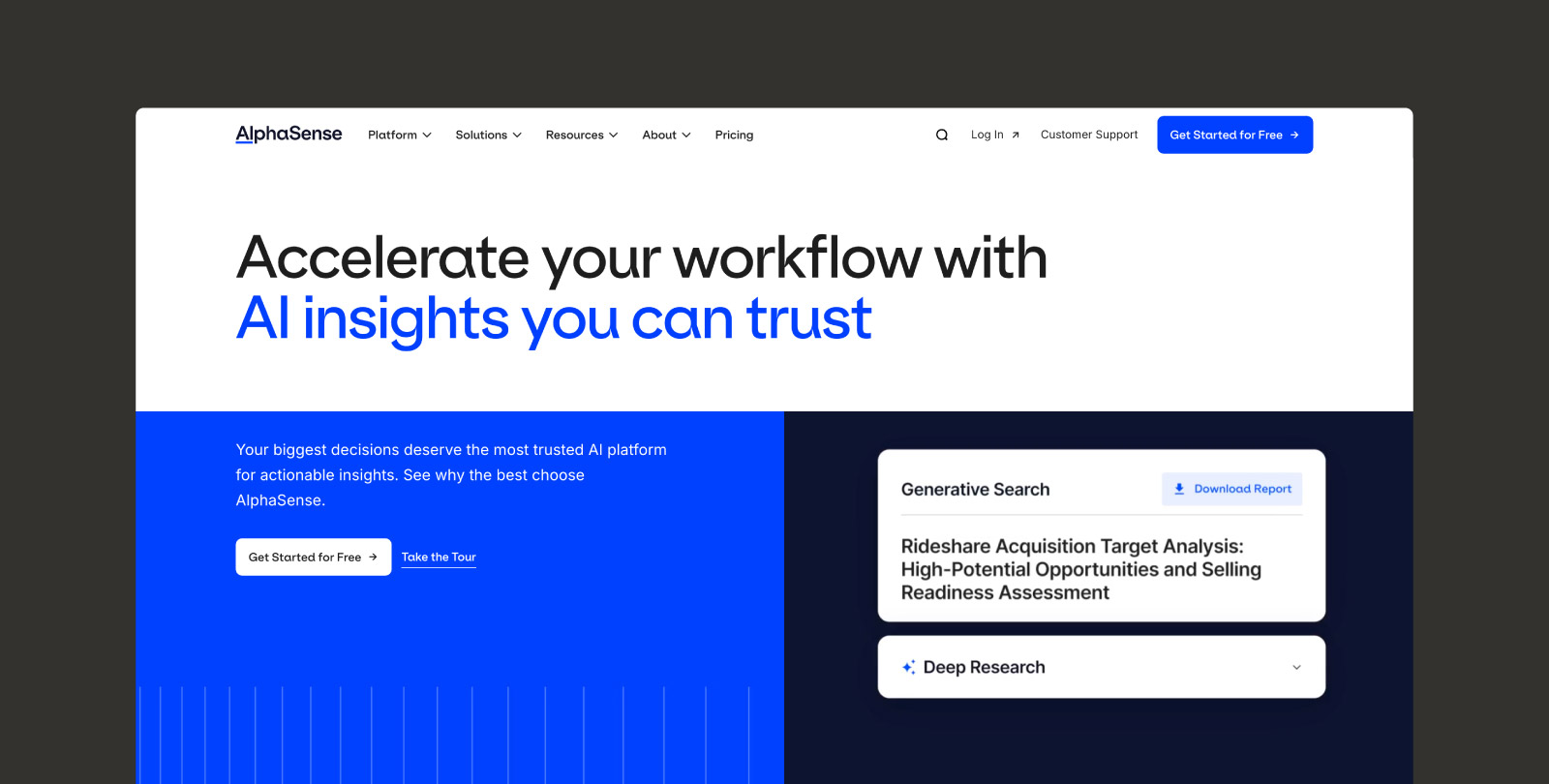
Best for: Monitoring public issuers, tracking earnings call transcripts, and accessing broker research and expert call content
AlphaSense is a market intelligence platform with deep coverage of earnings transcripts, broker research, expert call content, and regulatory filings. As a public-side financial research tool, it helps teams stay current on issuer news, sector commentary, and sentiment across a wide content library.
The platform fit leans toward monitoring existing positions and tracking issuers rather than deep document synthesis across deal-specific files. For high-yield issuer surveillance, AlphaSense surfaces what changed and where. However, paired document intelligence is needed for parsing a proprietary VDR or a single dense credit agreement.
Key features:
- Proprietary content library: Offers broad coverage of broker research, expert interviews, and filings in one searchable place.
- Generative Grid for cross-document comparison: Produces structured side-by-side answers extracted across multiple documents at once.
- Smart Synonyms and sentiment analysis: Expands search across related terminology and flags tone shifts in issuer language.
- Real-time alerting: Notifies users of new filings, transcripts, and news for tracked issuers.
3. Octus
Best for: Distressed debt, high-yield, and restructuring research
Octus (formerly Reorg) is a credit intelligence platform focused on distressed debt, restructuring, and high-yield markets. It combines AI-assisted document parsing with human analyst coverage, a pairing that suits situations where context and primary-source detail both matter.
For teams working stressed and distressed names, Octus tracks credit events, covenant terms, and restructuring developments as they unfold. The analysts overlay the source documents with interpretation, which is valuable in fast-moving situations where a single amendment can shift recovery prospects.
Key features:
- Credit event monitoring and alerts: Tracks defaults, amendments, and restructuring milestones in real time.
- Human analyst coverage layered with AI: Provides analyst commentary that contextualizes parsed documents and primary sources.
- Covenant and term extraction: Provides structured tracking of covenant packages, baskets, and key definitions.
- Restructuring intelligence: Offers deep coverage of distressed situations, court filings, and creditor dynamics.
4. Bloomberg + AI Features
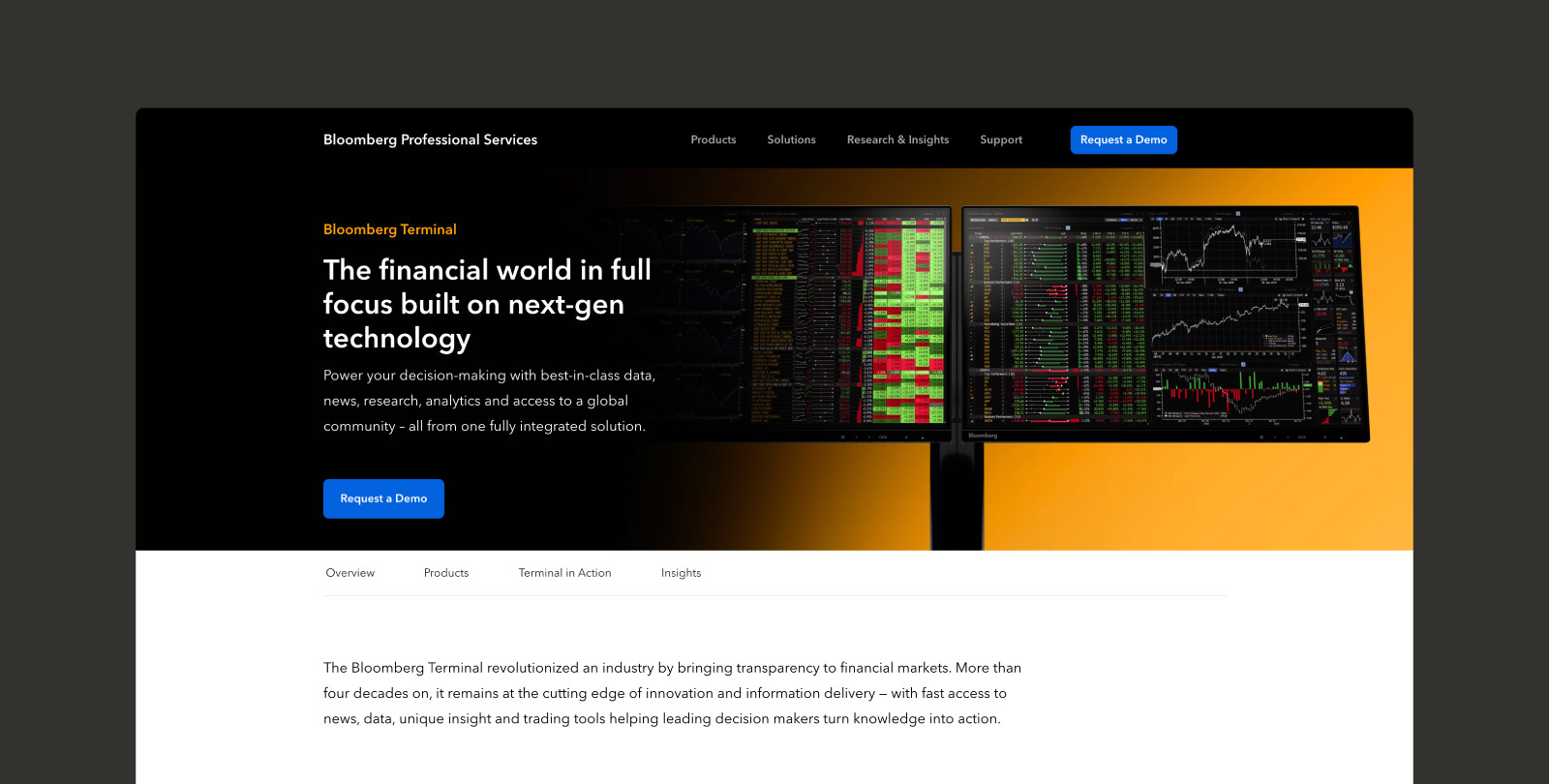
Best for: Real-time market data, news synthesis, and public-market monitoring
Bloomberg is one of the most trusted data sources in finance. Alongside the market intelligence that credit teams already run on, Bloomberg Terminal provides generative search, earnings call summarization, and news synthesis. For public-market monitoring, it serves as both a data backbone and stock-analysis software.
These AI features build on Bloomberg's foundation rather than replace it. They speed up retrieval and summarization, which keeps the platform central to pricing, fixed income analytics, and counterparty workflows. For document-heavy and AI due diligence across a firm's own private files, that data becomes the foundation for a reasoning platform.
Key features:
- Terminal integration: Combines market data, analytics, and news in one environment.
- AI-powered earnings summarization and generative search: Speeds up transcript, filing, and market news synthesis.
- Fixed income and credit analytics: Provides pricing, yield, and spread tools built for credit work.
- Counterparty messaging: Produces secure communication and trade context inside the Terminal.
5. PitchBook
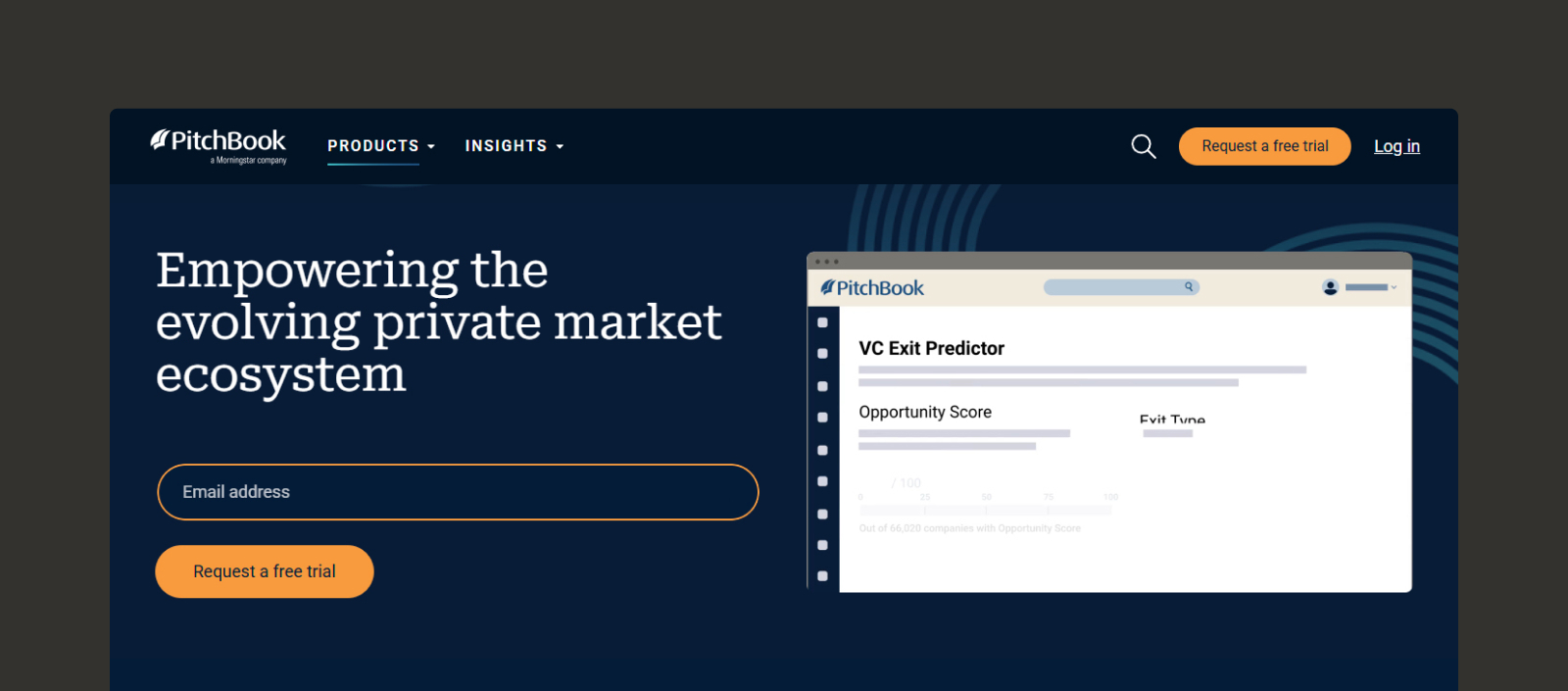
Best for: Private company research, sponsor coverage, and deal sourcing
PitchBook is a leading source of private market data. Its depth makes it valuable for LevFin teams sourcing and benchmarking deals, and it covers private company financials, ownership, deal history, and transaction sponsors and lenders. On a leveraged deal, that sponsor data helps you size up whether a private equity firm has a track record of over-levering portfolio companies before you underwrite the current one.
The platform's AI features also speed up company search and deal screening across that dataset. PitchBook answers who owns a business, who financed it, and how comparable deals are priced. Turning that context into a deal-specific risk view across a full document set is where a reasoning layer like Hebbia takes over.
Key features:
- Private company financials, ownership data, and deal history: Provides coverage of private businesses that public sources miss.
- Sponsor and lender coverage: Produces visibility into who backs and finances a given company.
- Comparables and precedent transaction data: Presents benchmarking data for valuation and deal structuring.
- AI-assisted company search and deal screening: Speeds up sourcing and shortlisting across the database.
6. ChatGPT

Best for: Early-stage drafting, summarization, and open-ended research on non-confidential material
ChatGPT is a general-purpose assistant that helps with drafting, summarization, and open-ended research. For early-stage thinking, a quick first-pass summary, or a rough memo outline, it is fast and flexible, though outputs still need a rewrite and a source check before they're ready for an investment committee or credit committee. Support for Advanced Data Analysis and Custom GPTs extends its use cases further to lightweight data tasks and repeatable prompts.
However, consumer ChatGPT has no enterprise data controls and retains data by default. This makes the tool inappropriate for confidential deal documents, credit agreements, or any material nonpublic information (MNPI).
For general workflows, as well as regulated credit and banking, it also lacks the document scale, structured outputs, and source-level citations that deal-specific research demands.
Key features:
- Conversational AI for research and summarization: Builds quick drafts and summaries from pasted, non-confidential text.
- Advanced Data Analysis: Provides lightweight analysis and charting on uploaded data.
- Memo and document drafting: Creates first-pass outlines and language for an analyst to refine.
- Custom GPT support: Offers reusable prompts and instructions for recurring tasks.
7. Covenant Review
Best for: Reviewing bond indenture and credit agreement risk before committing capital
Fitch Solutions owns Covenant Review, which reads through indentures and credit agreements to assess the terms that set creditor rights. Analysts use it to check how much protection a document actually gives lenders before capital goes out the door.
Coverage runs across new issue high yield bonds and leveraged loans, with key metrics on a new deal available within hours of launch and a full term sheet review within 24 hours. Each document gets scored against Covenant Review's composite strength framework, so a team can gauge how a deal compares to market norms without reading the full agreement line by line.
Key features:
- Composite covenant strength scoring: Scores each document against a composite framework tied to specific lender protections.
- Indentures and credit agreements database: Benchmarks a new deal against a historical base of 80,000+ indentures and credit agreements.
- Rapid new issue analysis: Delivers key deal metrics, such as EBITDA addback allowances and headline-versus-adjusted leverage, within hours of launch and a full term-sheet review within 24 hours.
8. 9Fin
Best for: High yield, leveraged loan, and private credit research with covenant data built in
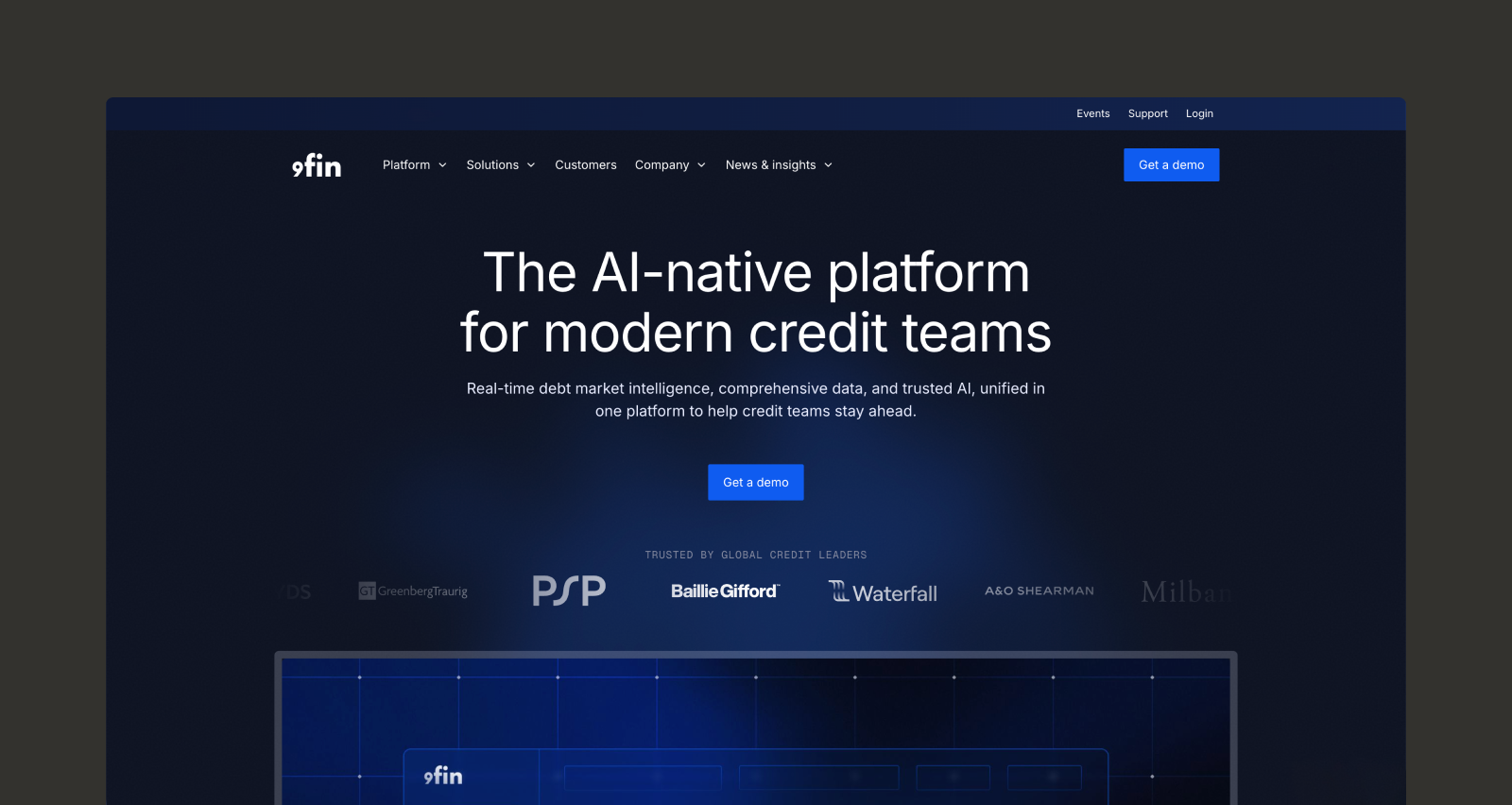
Debt market investors and credit analysts use 9fin to turn long bond and loan documents into structured, searchable data instead of a stack of PDFs. The platform covers leveraged loans and high yield bonds, plus distressed credit and private markets, in one place. Its AI chat answers credit questions directly from that structured base, pulling covenant terms and capital structure details into a single response.
Coverage runs deep too, spanning more than two decades of deal history and covenant data across thousands of issuers, giving a new deal precedent to compare against instead of a cold start. The company raised a $170 million Series C in March 2026 at a $1.3 billion valuation, a signal that the market sees real demand for an AI layer built specifically on debt market documents.
Key features:
- AI chat grounded in proprietary debt market database: Answers credit questions by pulling from covenant data, capital structures, financial statements, and company filings instead of general web knowledge.
- Structured cross-company comparisons: Generates side-by-side comparisons across a peer set, such as covenant flexibility or leverage headroom, using predefined or custom frameworks.
- Real-time credit news and analytics: Surfaces breaking credit market news and analytics as it happens, keeping coverage current between full document reviews.
Choosing the Right Tool for Your Leveraged Finance Workflow
The right AI tool for leveraged finance research depends on the work in front of you, not the feature list. When choosing the LevFin tool for your team, remember:
- A team monitoring public high-yield issuers has different needs than one parsing a single sponsor's credit agreement under a deadline.
- A market intelligence platform works for public-issuer surveillance, broker research, and transcripts, while document intelligence will do the lifting for credit risk and covenant work. Most teams choose tools that combine several of these features, anchoring trusted data sources to a layer that reasons across them.
Hebbia Supports Leveraged Finance Research for Leading Teams
Teams often run into limits with document-heavy, deal-specific research.
Parsing a credit agreement, synthesizing a full VDR, or running structured analysis across hundreds of proprietary files requires a platform built to reason over unstructured documents at scale. This is where Hebbia's AI solutions, including its deeper diligence, rapid source analysis, and automated workflows, are built to perform.
Book a demo to see how Hebbia cuts weeks of research time to days and moves faster on every deal.


